
 Save
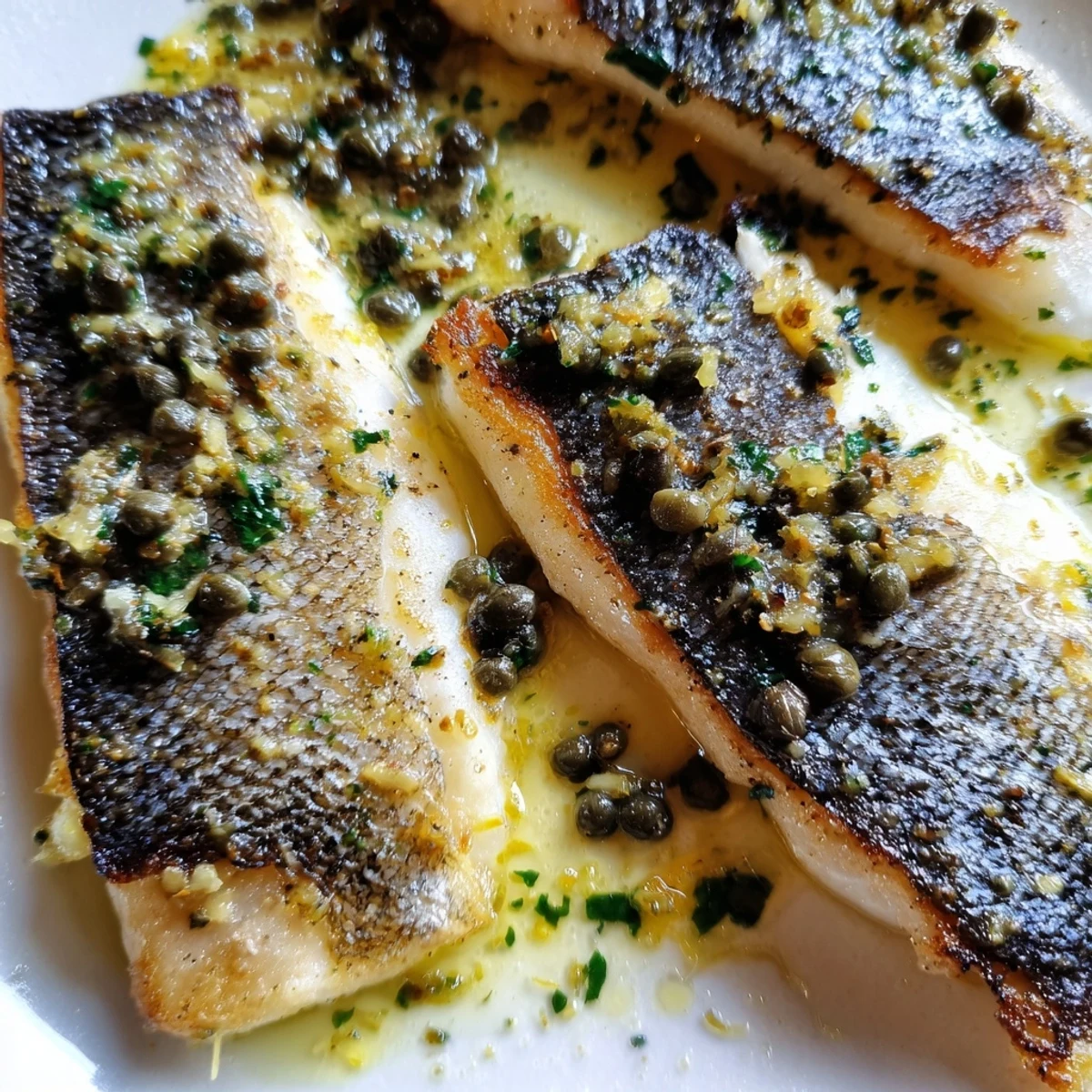
Save This dish features tender sea bass fillets seared to crispy perfection with skin-on, then topped with a tangy lemon caper butter sauce. The sauce melts butter, garlic, shallots, capers, lemon juice, zest, and parsley into a bright, flavorful finish. It’s a simple yet tasteful preparation ideal for a refined meal, showcasing fresh Mediterranean ingredients and a quick cooking method that delivers elegance in under 30 minutes.
The first time I truly understood what elegant simplicity meant was during a dinner party where a friend brought pan seared sea bass with a bright lemon caper butter. I watched the fillets turn golden in the pan, heard that gentle sizzle, and realized that sometimes the most impressive meals require only a few quality ingredients and the confidence to let them shine. That evening changed how I cook fish entirely.
I made this for someone special once and they asked for the recipe before finishing their plate. That's when I knew I'd nailed it. The way the lemon cuts through the richness of the butter, the little pops of brine from the capers—it all just works. Now it's my go-to when I want to cook something that feels restaurant-quality but stays grounded.
Ingredients
- Sea bass fillets, skin on, patted dry (4 fillets, 5-6 oz each): Keeping the skin on is the secret to that crispy, golden exterior that makes this dish feel special. Patting them dry beforehand is the step that actually makes it happen—moisture is the enemy of crispness.
- Kosher salt and freshly ground black pepper: Don't skip freshly grinding the pepper yourself; pre-ground sits in your pantry and loses its punch. These two are your foundation.
- Olive oil (2 tbsp): Use a good quality oil that can handle medium-high heat. This is your vehicle for achieving that golden sear.
- Unsalted butter (3 tbsp): Unsalted lets you control the salt level in the sauce and gives you a cleaner canvas for the lemon and capers to shine.
- Capers, rinsed and drained (2 tbsp): Rinsing them is non-negotiable—it tames the saltiness and keeps the sauce balanced. Those little briny bursts are what elevate this from simple to memorable.
- Shallot, finely minced (1 small): Shallots mellow out as they cook, adding a subtle sweetness that rounds out the acidity of the lemon.
- Garlic, minced (2 cloves): Just a touch here—you want the fish and lemon to stay front and center, with garlic as a whisper in the background.
- Fresh lemon juice and zest (1 lemon): The backbone of the entire sauce, so choose a fragrant lemon and zest it before juicing.
- Fresh parsley, chopped (1 tbsp): Added at the very end, it brings brightness and a little visual pop.
Instructions
- Pat and season the fillets:
- Use a clean kitchen towel or paper towels to gently press both sides of each fillet—moisture on the surface will steam the skin instead of crisping it. Season generously on both sides right before cooking, so the salt doesn't draw out more liquid.
- Get your skillet singing:
- Pour olive oil into a large nonstick skillet and set it over medium-high heat. You're looking for that shimmering, almost wavering appearance on the surface—that's when you know it's ready.
- Sear the fish skin-side down:
- Lay the fillets skin-side down in the hot oil and immediately press gently with a fish spatula for the first few seconds. This helps the skin make full contact with the heat and crisp evenly over the next 3-4 minutes.
- Flip with confidence:
- Once the skin is golden and the flesh has turned opaque about a third of the way up the side, carefully slide your spatula underneath and flip. Cook the other side for just 2-3 minutes—the fish continues cooking even after you remove it.
- Rest while you build the sauce:
- Transfer the fillets to a warm plate and loosely tent with foil. This keeps them warm without trapping steam that would soften the crispy skin.
- Toast the aromatics:
- Turn the heat down to medium, add 1 tbsp butter to the same skillet, and scatter in the minced shallot. Let it sizzle for about a minute until fragrant, then add the garlic and capers for just 30 seconds.
- Create the emulsion:
- Pour in the lemon juice and stir, then add the remaining 2 tbsp butter off the heat. Swirl constantly until it's melted and the sauce looks silky and cohesive—that's the emulsion working its magic.
- Finish with freshness:
- Stir in the chopped parsley and lemon zest right before serving, so they stay bright and fragrant.
 Save
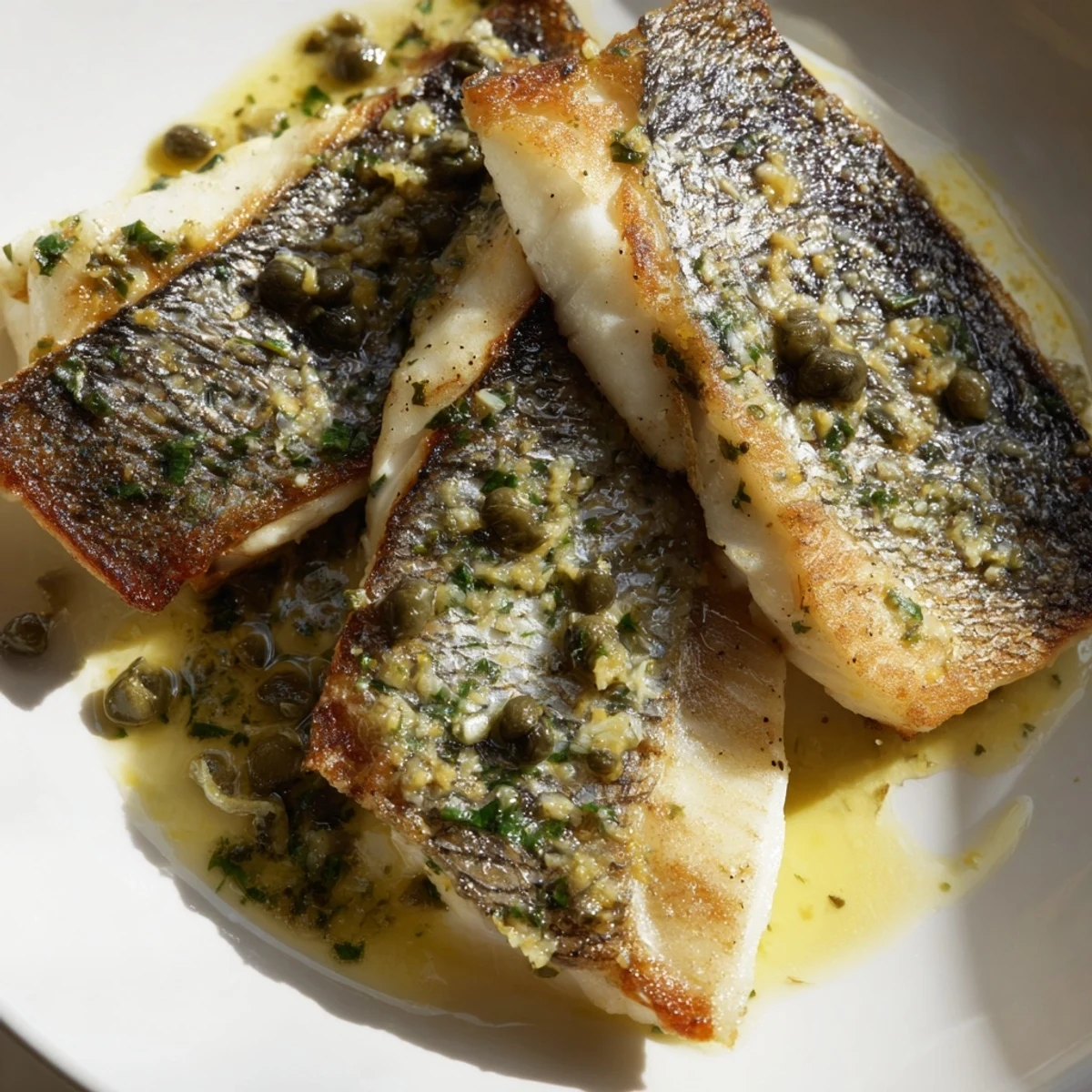
Save There's a moment right when the sauce is done—when that golden butter coats the back of a spoon and smells of lemon and capers—where the whole dish comes together in a way that feels bigger than its simple ingredients. Plating it quickly while everything is still warm and at its peak is when cooking becomes less about technique and more about the small joy of serving something beautiful.
Choosing Your Fish
Sea bass has a delicate, buttery texture that pairs perfectly with this sauce, but snapper and cod work beautifully too. I once substituted cod when sea bass wasn't available and honestly couldn't tell the difference—the sauce was so good it elevated whatever was underneath. The key is picking fillets that are similarly thick so they cook at the same pace.
Building Flavor in the Butter
This sauce is all about restraint and balance. Some people add a splash of dry white wine right after the garlic cooks, and I'll admit it adds a subtle complexity that makes you pause and ask what just happened. You can also finish with a tiny pinch of red pepper flakes for heat, but taste it first—the capers already bring plenty of character.
Serving and Storage
Serve immediately on warm plates while the skin is still crisp and the sauce is glossy. I like pairing this with sautéed spinach or a simple lemon dressed salad so the brightness echoes across the plate. Leftovers work, though the skin won't stay crispy—you can flake the fish and toss it with pasta and extra sauce if you're creative.
- For a vegetable side, sauté fresh spinach in garlic and olive oil while the fish cooks.
- Crispy roasted potatoes on the side catch extra sauce and make the meal feel more complete.
- Fresh green salad dressed with lemon vinaigrette ties the whole plate together without heaviness.
 Save
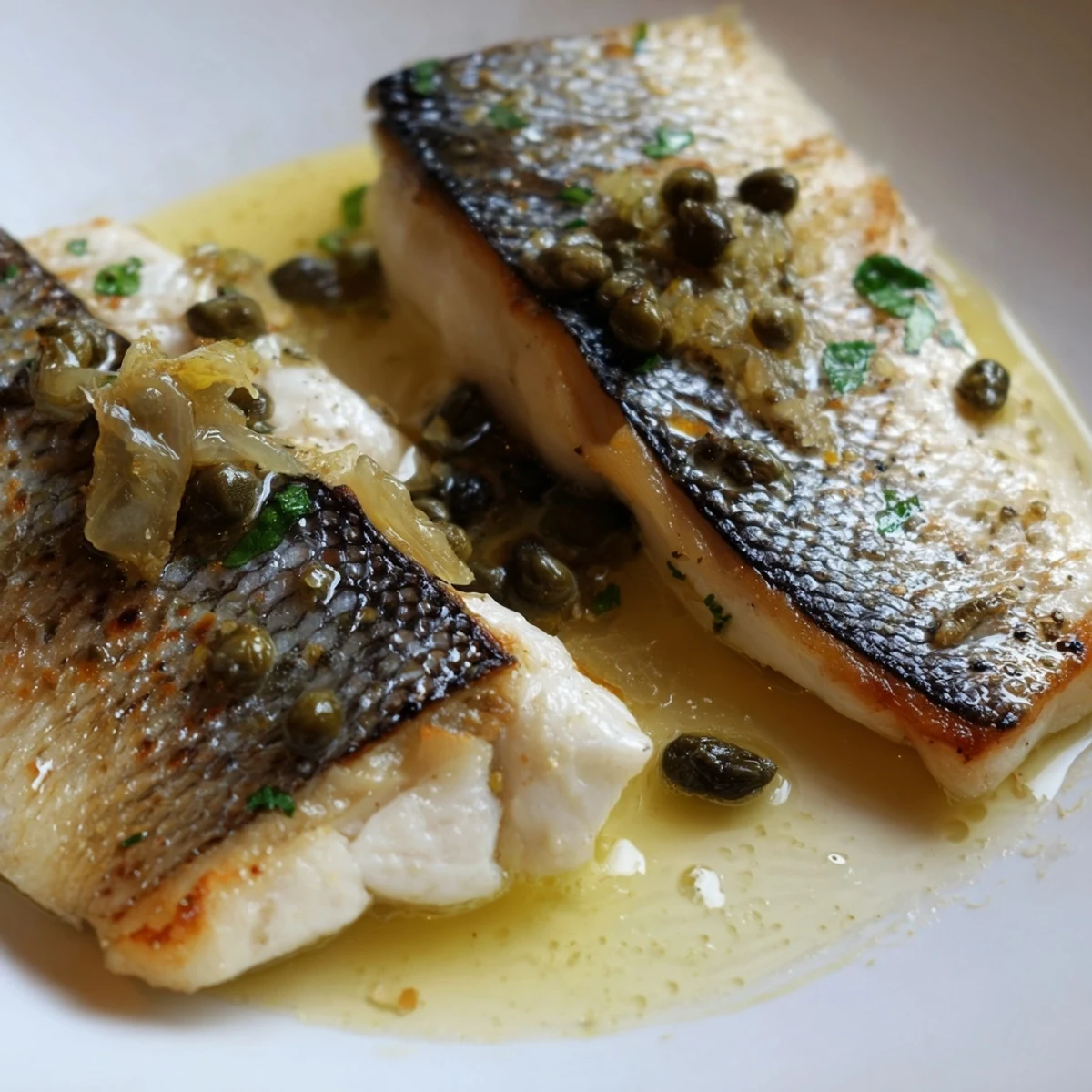
Save This dish proves that the best meals don't need to be complicated. When you respect good fish and let bright, simple flavors do what they were born to do, magic happens in 25 minutes.
Recipe FAQs
- → What type of pan is best for searing sea bass?
-
A large nonstick skillet or a well-seasoned cast iron pan ensures even heat distribution and prevents sticking, perfect for crisping the skin.
- → How can I tell when the sea bass is cooked properly?
-
The flesh should turn opaque and flake easily with a fork. Typically, 3-4 minutes per side on medium-high heat achieves this without drying out the fish.
- → What role do capers play in the sauce?
-
Capers add a briny, tangy burst that balances the richness of melted butter and brightens the lemon flavor in the sauce.
- → Can I prepare this dish ahead of time?
-
It’s best served immediately after cooking for optimal crispness and sauce freshness, though ingredients can be prepped in advance.
- → What sides pair well with pan seared sea bass?
-
Sautéed spinach, roasted potatoes, or a light green salad complement the delicate flavors and keep the meal balanced.