
 Save
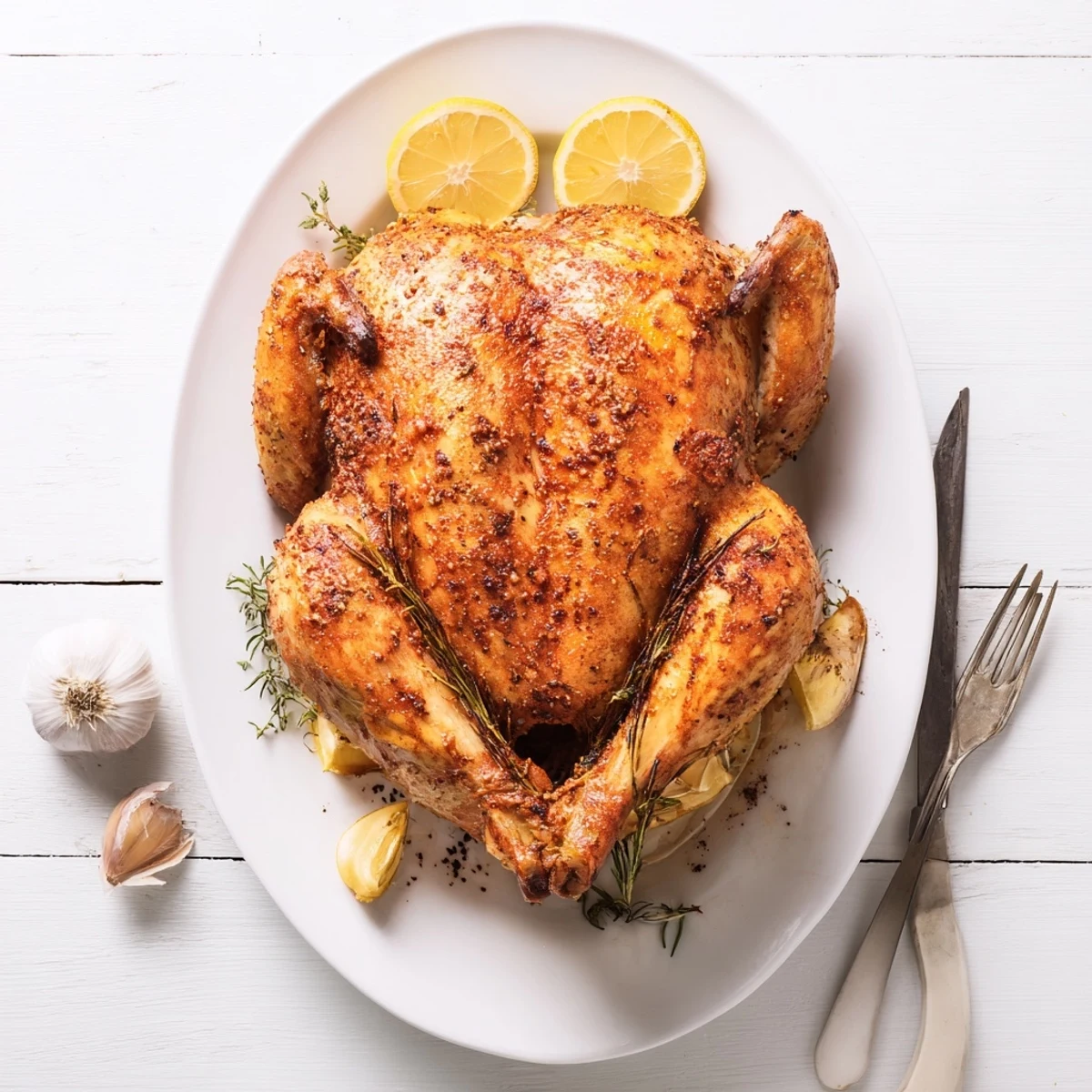
Save This method delivers perfectly cooked poultry with irresistibly crispy, golden skin and juicy, aromatic meat throughout. The spice blend creates a savory, smoky crust while lemon and garlic infuse the meat from inside the cavity.
Whether using a rotisserie spit or oven roasting, the technique ensures even cooking and beautiful browning. Letting the bird rest before carving allows juices to redistribute, guaranteeing moist slices every time.
The seasoning mixture strikes an ideal balance—paprika for color and subtle heat, garlic and onion powder for depth, plus dried herbs for earthy notes. This dish impresses guests while remaining straightforward enough for weeknight meals.
The smell of a whole chicken roasting has this way of stopping everyone in their tracks and pulling them toward the kitchen. I started making this on Sundays when I needed something that felt special but didn't require all-day attention. My husband actually asked if I'd secretly ordered from a rotisserie the first time he tried it, which I took as the highest compliment possible.
Last winter, my sister came over during that gray slushy season where everyone needs serious comfort food. We pulled this chicken out of the oven right as her kids were bouncing off the walls hungry, and suddenly the whole mood shifted. There's something about breaking into that golden crust together that makes people settle in and stay at the table way longer than usual.
Ingredients
- 1 whole chicken (3.5–4 lbs): I've learned that letting it sit at room temperature for 30 minutes before seasoning helps it cook more evenly
- 2 tbsp olive oil: This creates the base that helps all those spices actually cling to the skin instead of falling off
- 2 tsp kosher salt: Don't skip this or reduce it, that's what gets you that restaurant-quality seasoned flavor through every bite
- 1 tsp freshly ground black pepper: Freshly cracked makes a difference you can actually taste in the final dish
- 1 tbsp paprika: Smoked paprika gives you this subtle bacon-like flavor that people can't quite identify but love
- 1 tsp garlic powder: This distributes garlic flavor way better than fresh garlic would in the rub itself
- 1 tsp onion powder: The secret ingredient in so many restaurant spice blends for that savory depth
- 1 tsp dried thyme: Earthy and floral without being overpowering, perfect for poultry
- 1/2 tsp dried rosemary: A little goes a long way, too much and it tastes like pine needles
- 1 lemon, halved: The acidity steams inside the cavity and keeps the meat surprisingly moist
- 4 garlic cloves, smashed: These mellow out as they roast and infuse the meat from the inside
- Fresh herbs: Tucking whatever you have on hand inside adds those aromatic layers that make it taste homemade
Instructions
- Get the oven ready:
- Preheat to 375°F (190°C) or fire up your rotisserie grill, making sure you've got enough clearance for the whole bird.
- Prep the chicken:
- Pat it completely dry with paper towels, then gently slide your fingers under the breast and thigh skin to loosen it without tearing.
- Mix the magic rub:
- Combine olive oil, salt, pepper, paprika, garlic powder, onion powder, thyme, and rosemary in a small bowl until it forms a paste.
- Season everywhere:
- Rub half the mixture under that loosened skin, then massage the remaining seasoning all over the exterior.
- Stuff the cavity:
- Fill the inside with lemon halves, smashed garlic, onion quarters if you have them, and any fresh herb sprigs you grabbed.
- Truss it tight:
- Tie the legs together with kitchen twine and tuck the wing tips under so everything cooks evenly and looks neat.
- Rotisserie method:
- Secure on the spit and roast for 1 hour 10–20 minutes until thigh hits 165°F and juices run clear.
- Oven method:
- Place breast-side up on a rack in a roasting pan and roast for 1 hour 20 minutes, basting occasionally.
- The crucial rest:
- Let it sit tented with foil for 10–15 minutes so the juices redistribute instead of running all over your cutting board.
 Save
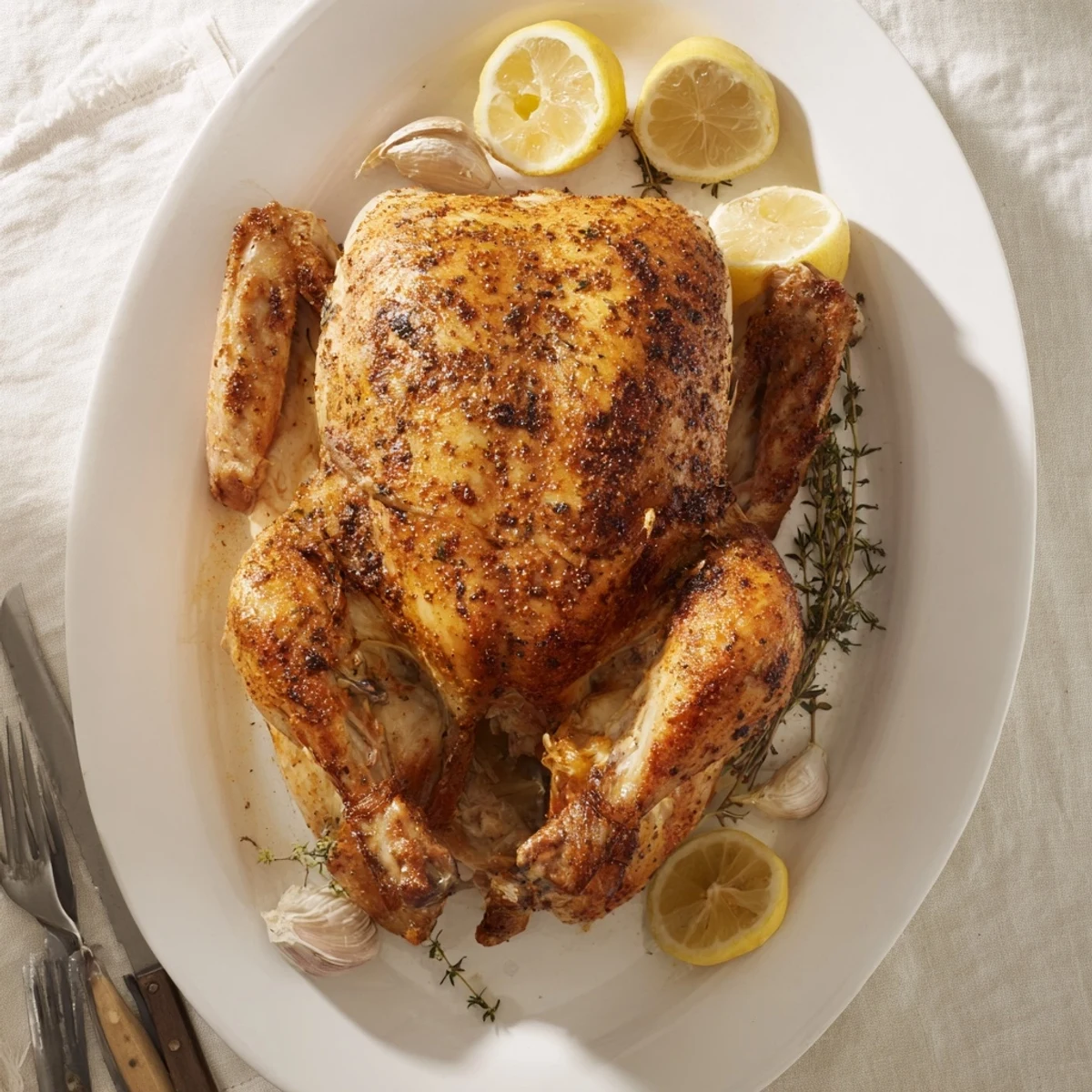
Save This became my go-to when I hosted my first proper dinner party and was nervous about everything. Watching friends grab seconds and actually lick their fingers gave me this ridiculous surge of confidence. Now it's just this reliable old friend in my cooking rotation.
Getting That Perfect Crisp
I accidentally discovered that patting the chicken absolutely dry with paper towels is the step most people rush through. Any moisture on the skin creates steam instead of crunch, so I'm religious about getting it bone-dry before any oil touches it.
Carving Like You Mean It
Let it rest longer than you think you should, and use a sharp knife instead of sawing away. I learned the hard way that rushing this step leaves you with a cutting board full of escaped juices and dry meat.
Make It Your Own
Sometimes I swap smoked paprika for regular when I want something different, or add extra herbs if my garden is overflowing. The base method stays solid even when you tweak the flavors.
- Try adding a little brown sugar to the rub if your family likes that sweet-savory combo
- Throw some root vegetables in the pan to roast alongside the chicken drippings
- Save the backbone and wing tips for homemade stock later
 Save
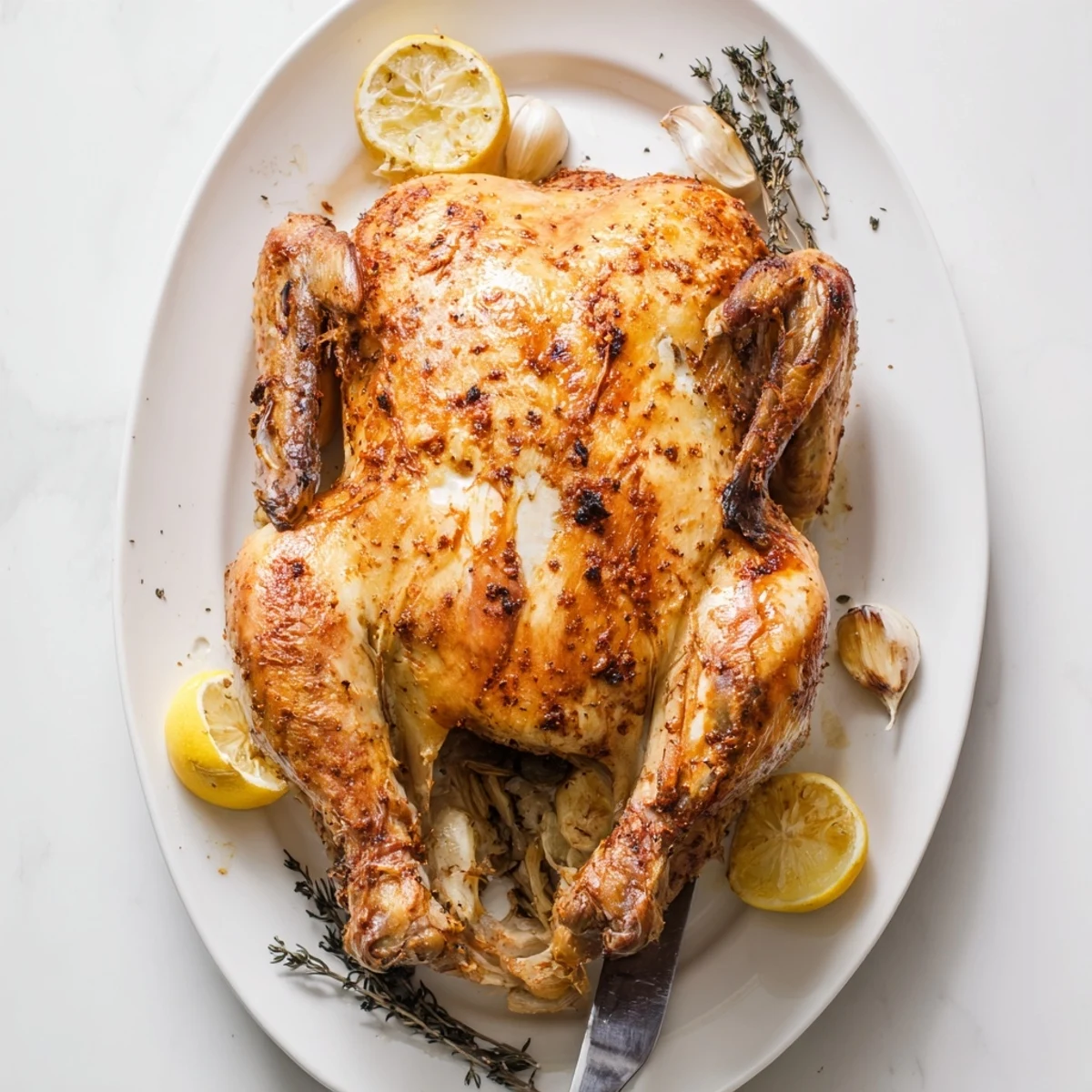
Save There's something deeply satisfying about pulling a perfectly roasted chicken from the oven, crispy and golden. It turns a regular Tuesday into something worth gathering around.
Recipe FAQs
- → How do I get the crispiest skin possible?
-
Air-dry the uncovered bird in the refrigerator for 2–12 hours before cooking. This removes surface moisture, allowing skin to crisp beautifully. Cooking at the proper temperature and letting it rest before carving also affects texture.
- → What temperature should the internal meat reach?
-
The thickest part of the thigh must register 165°F (74°C) on a meat thermometer. This ensures safe consumption while keeping the meat juicy and tender throughout.
- → Can I use different herbs and spices?
-
Absolutely. Try sage, oregano, or fennel seeds in place of thyme and rosemary. Cayenne adds heat, while smoked paprika deepens the savory profile. Adjust quantities to suit your taste preferences.
- → Why is trussing or tying the legs important?
-
Trussing helps the bird cook evenly by keeping the legs and wings close to the body. This presentation also results in a more attractive appearance and prevents extremities from drying out during roasting.
- → How long should the chicken rest before serving?
-
Allow 10–15 minutes of resting time under a loose foil tent. This crucial step lets juices redistribute throughout the meat rather than spilling onto the cutting board, ensuring each slice stays moist and flavorful.
- → What sides complement this dish best?
-
Roasted root vegetables like carrots and potatoes pair beautifully. Fresh green salads with vinaigrette provide contrast. Mashed potatoes, steamed broccoli, or warm dinner rolls also make excellent accompaniments for a complete meal.