
 Save
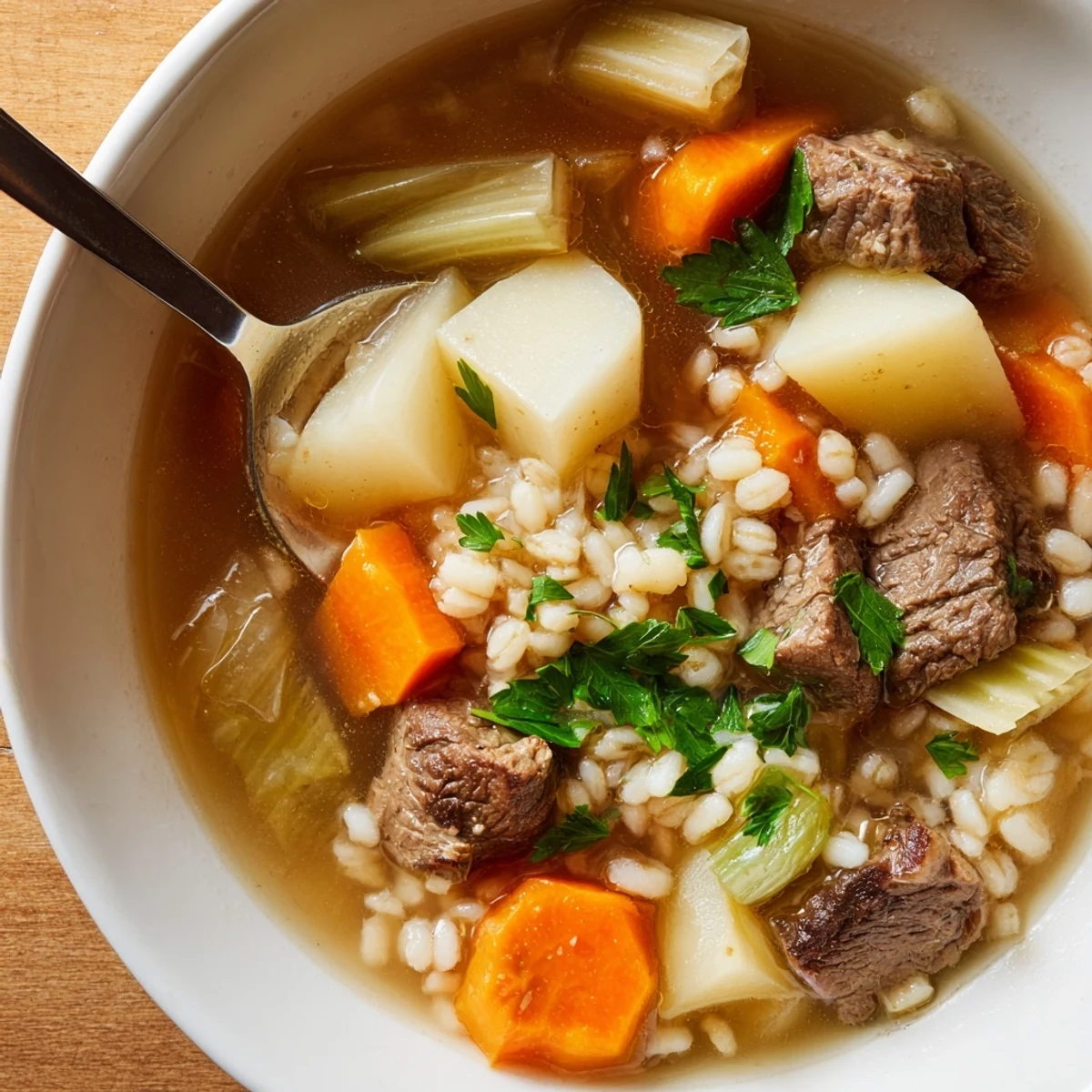
Save This hearty blend combines tender beef chunks with nutty pearl barley and a medley of root vegetables. Simmered slowly in flavorful broth infused with thyme, rosemary, and tomato paste, it yields a rich and comforting dish perfect for chilly days. The mix of carrots, parsnips, potatoes, celery, and turnip provide a natural sweetness and texture that balances the savory meat. Garnished with fresh parsley, this dish offers warmth and depth ideal for main meals.
There's something about the first truly cold evening of the year that makes me pull out my biggest pot and start browning beef. My neighbor stopped by one October afternoon, and the smell of searing meat and caramelizing onions drew her right into the kitchen—she didn't leave until we'd shared a bowl and she was asking for the recipe. That's when I knew this stew had the kind of warmth that goes beyond temperature.
I made this for my dad one Sunday when he was recovering from surgery, and he told me it tasted like being taken care of. There's something about a stew that does that—it's humble enough to be comforting but substantial enough to feel like real nourishment.
Ingredients
- Beef chuck, 2 lbs cut into 1-inch cubes: This cut has enough marbling and connective tissue to become impossibly tender after two hours of simmering, which is exactly what you want.
- Olive oil, 2 tbsp: Just enough to get a proper sear on the meat without using too much fat.
- Onion, 1 large diced: The flavor base that mellows and sweetens as it cooks, binding all the other flavors together.
- Garlic, 3 cloves minced: Add this after the onion softens, or it'll burn and turn bitter—a lesson I learned early.
- Carrots, 3 peeled and sliced: They stay slightly firm and add natural sweetness that balances the savory herbs.
- Parsnips, 2 peeled and chopped: These are the secret ingredient that nobody expects but everyone notices—they add an earthy, slightly nutty sweetness.
- Celery, 2 stalks chopped: Adds depth without demanding attention, which is the best kind of ingredient.
- Potatoes, 2 medium peeled and cubed: They'll soften and help thicken the broth naturally as they break down slightly.
- Turnip, 1 peeled and diced: It keeps its structure and adds a subtle sharpness that prevents the stew from feeling heavy.
- Pearl barley, 3/4 cup rinsed: Rinsing removes the starch coating so the barley stays separate and doesn't make the broth cloudy.
- Beef broth, 6 cups low sodium recommended: Low sodium lets you control the salt level and taste the actual beef flavor.
- Water, 1 cup: Dilutes the broth slightly so the vegetables can release their flavors without overwhelming the pot.
- Tomato paste, 2 tbsp: A small amount adds depth and slight acidity that brightens the whole pot.
- Dried thyme, 1 tsp: Herbaceous and subtle, it gets stronger as the stew simmers.
- Dried rosemary, 1 tsp: Piney and warm, but use the amount I suggest—too much becomes overwhelming.
- Bay leaves, 2: Remove them before serving; they season without being eaten.
- Black pepper, 1/2 tsp plus salt to taste: Add most of the pepper early so it infuses, then adjust salt at the very end when you can really taste it.
- Fresh parsley, 2 tbsp chopped optional: A bright, fresh finish that cuts through the richness.
Instructions
- Brown the beef:
- Heat olive oil in your pot over medium-high until it shimmers. Working in batches so the pan stays hot, add beef and let it sit for a few minutes before stirring—this is how you get a real golden crust, not gray meat.
- Build the flavor base:
- Once the beef is out, add the diced onion to the same pot and let it soften for three minutes, scraping up all those flavorful browned bits. Stir in minced garlic for just one minute; you want it fragrant, not cooked to death.
- Add the root vegetables:
- Toss in the carrots, parsnips, celery, potatoes, and turnip, stirring every minute or so for about five minutes. They'll start to soften slightly at the edges and smell incredible together.
- Layer in the aromatics:
- Return the beef to the pot, then add tomato paste, thyme, rosemary, bay leaves, and pepper. Stir everything until the beef is coated in the paste mixture—this looks a bit pasty, but it's exactly right.
- Add the liquid and simmer:
- Pour in the beef broth and water, bring everything to a boil, then reduce the heat to low and cover. Let it sit undisturbed for one full hour; you want a gentle bubble, not an aggressive boil.
- Add the barley:
- After the first hour, stir in the rinsed barley and cover again. Simmer for another 45 minutes until the barley is creamy and the beef is fall-apart tender.
- Finish and serve:
- Fish out the bay leaves, taste the stew, and add salt until it tastes like itself—not salty, just fully itself. Ladle into bowls and top with fresh parsley if you like the brightness it adds.
 Save
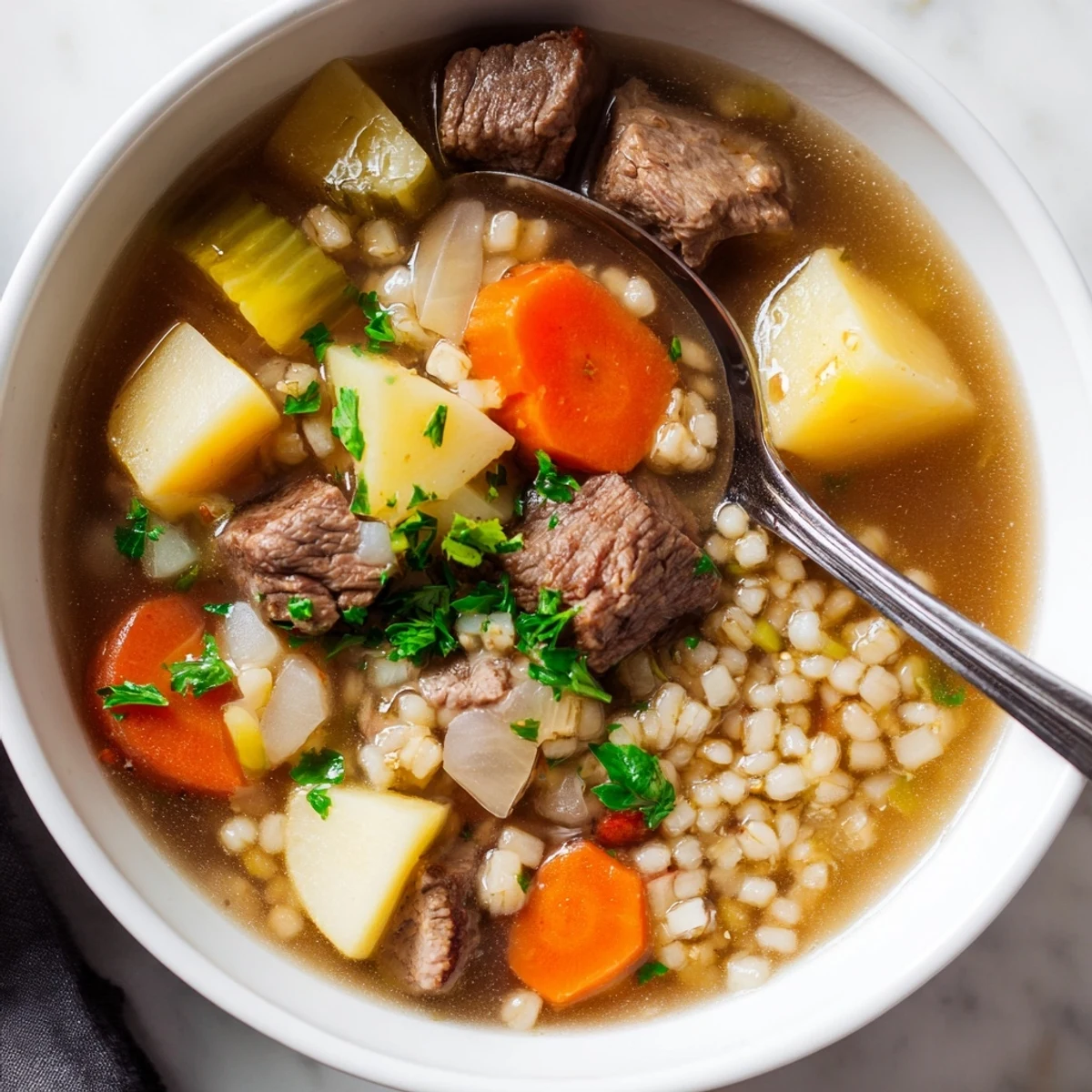
Save I remember opening the pot after an hour and being hit with that wave of steam and aroma, and knowing instantly that the house would smell like comfort for the rest of the day. That moment, when you know something is going to be good before you've even tasted it, is why I keep making this.
Why This Stew Works
The magic is in the mix of textures—the beef gets tender enough to cut with a spoon, the barley becomes creamy and slight starchy, and the vegetables stay firm enough that you can actually taste what they are. The long, slow cook isn't just about time; it's about letting the beef release collagen that makes the broth silky, while the vegetables and herbs flavor everything around them. There's no cream, no flour thickener, just the natural body that builds as everything cooks together.
Making It Your Own
This stew is forgiving enough that you can swap vegetables without losing the soul of it. If parsnips aren't your thing, use more carrots instead. If you want a deeper flavor, a splash of red wine where some of the water is adds a subtle richness. Some people add a teaspoon of Worcestershire sauce, which sounds like too much but somehow isn't. The point is that the structure of the recipe is solid, so you have room to play.
Storage and Reheating
This stew tastes better the next day, and it tastes even better the day after that—the flavors settle and deepen. It keeps in the fridge for four days in a covered container, and it freezes beautifully for up to three months. When you reheat it, do it low and slow on the stovetop, adding a splash of water if it's gotten too thick.
- Leftovers are perfect for lunch the next day, and they warm up in ten minutes.
- You can even thin it with extra broth and serve it as more of a soup if you're in the mood for something lighter.
- Don't throw away the little bit left at the bottom of the pot; that concentrated flavor is perfect for dipping bread.
 Save
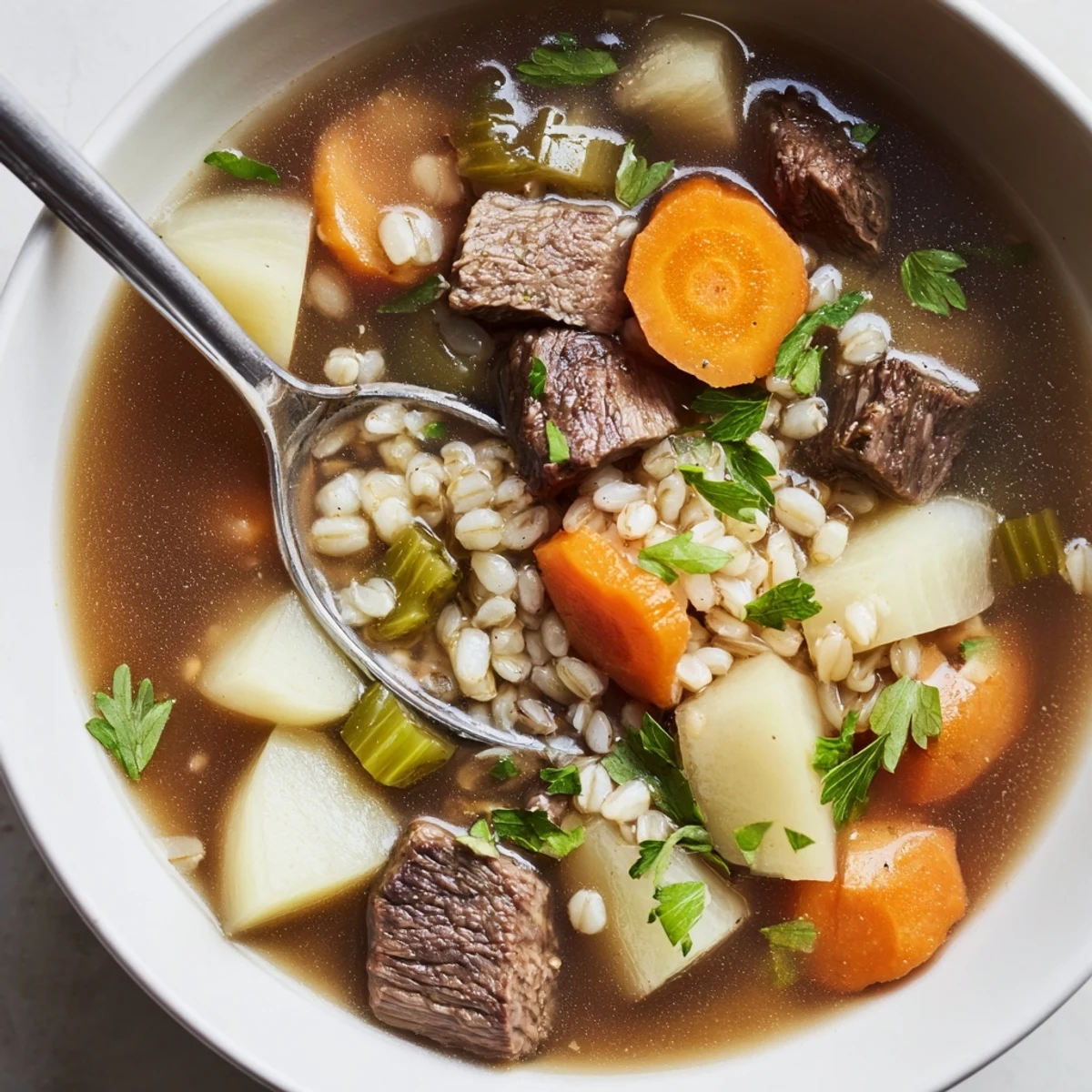
Save This stew is the kind of dish that reminds you why cooking for people matters. It's simple enough to make on a weeknight but satisfying enough to serve to anyone you want to impress.