
 Save
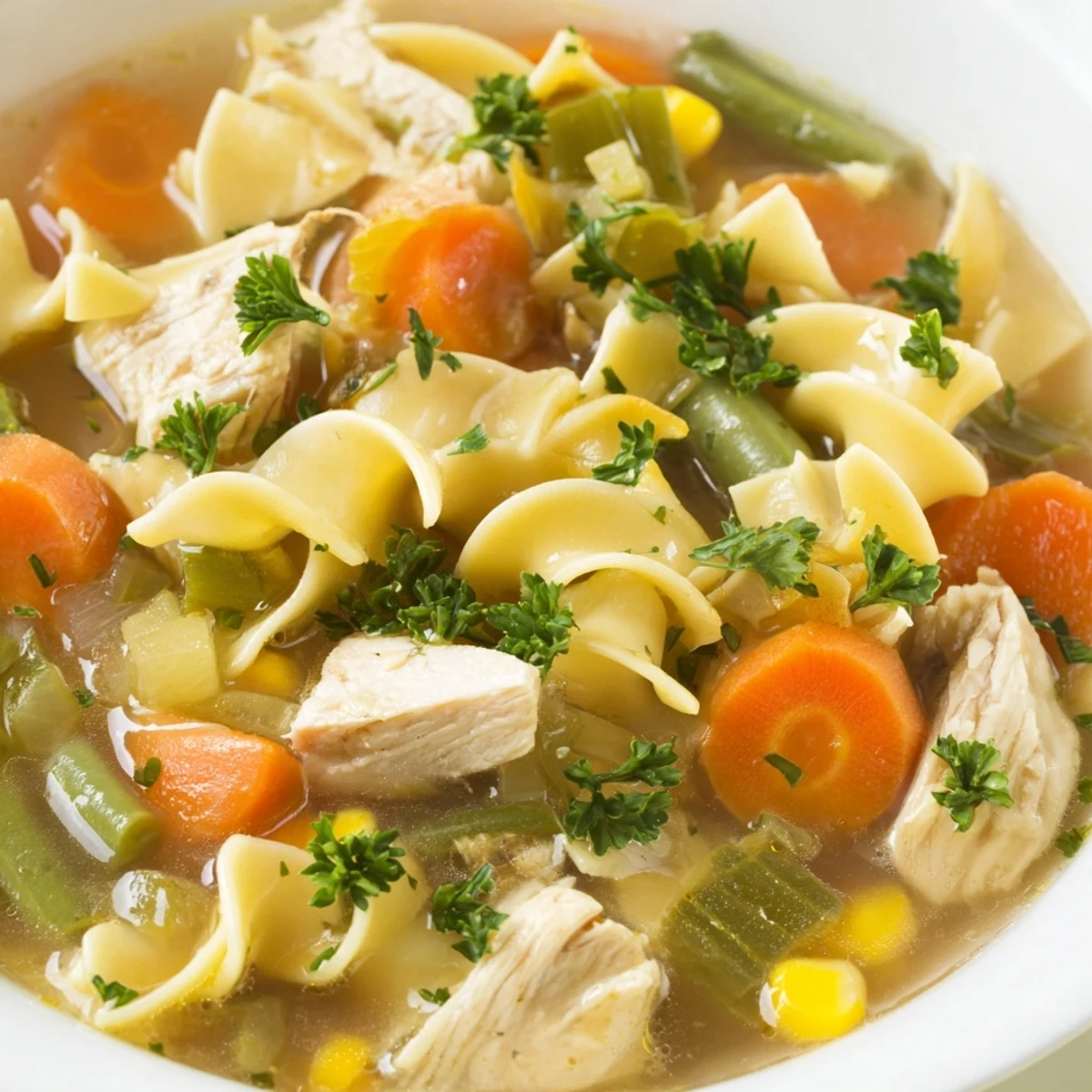
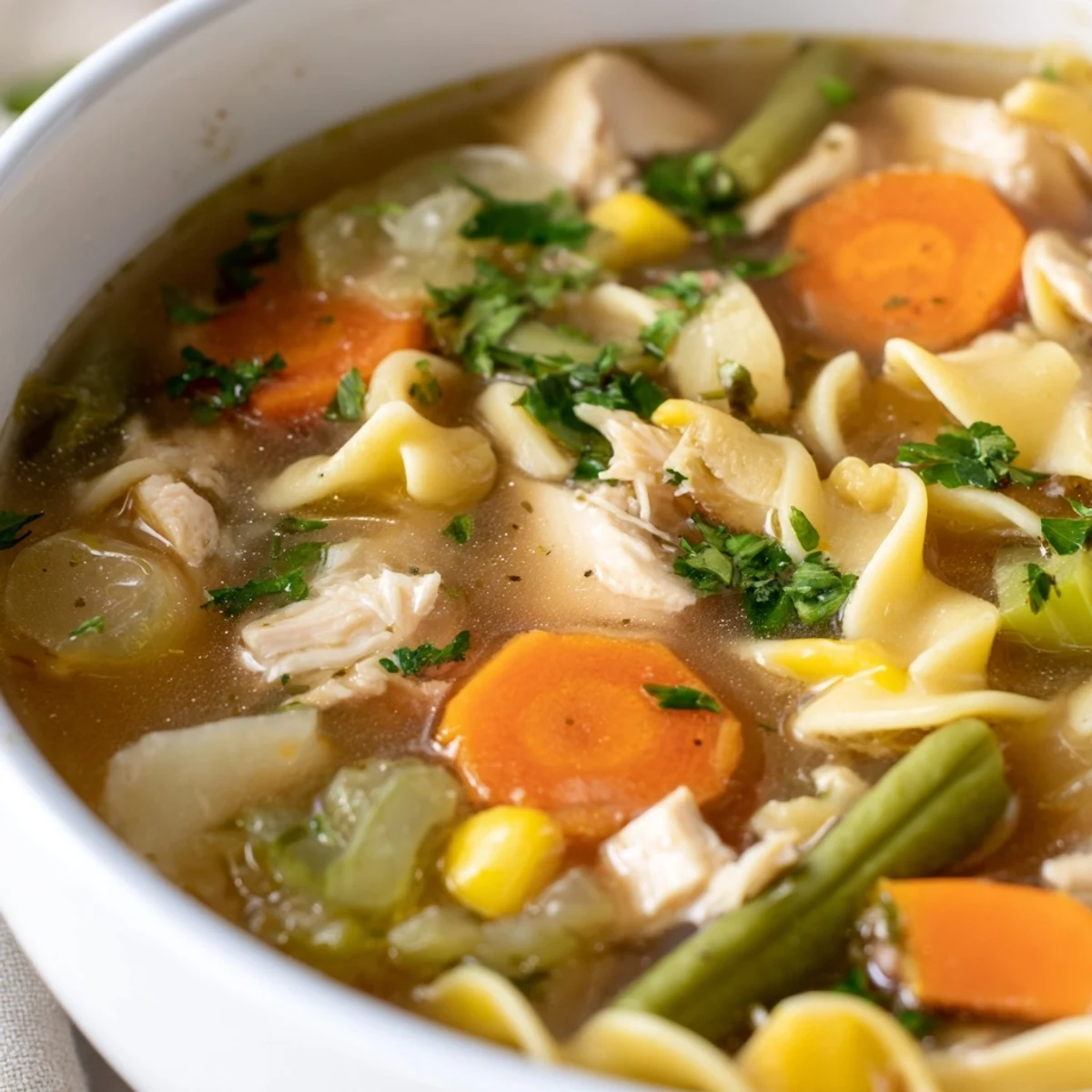
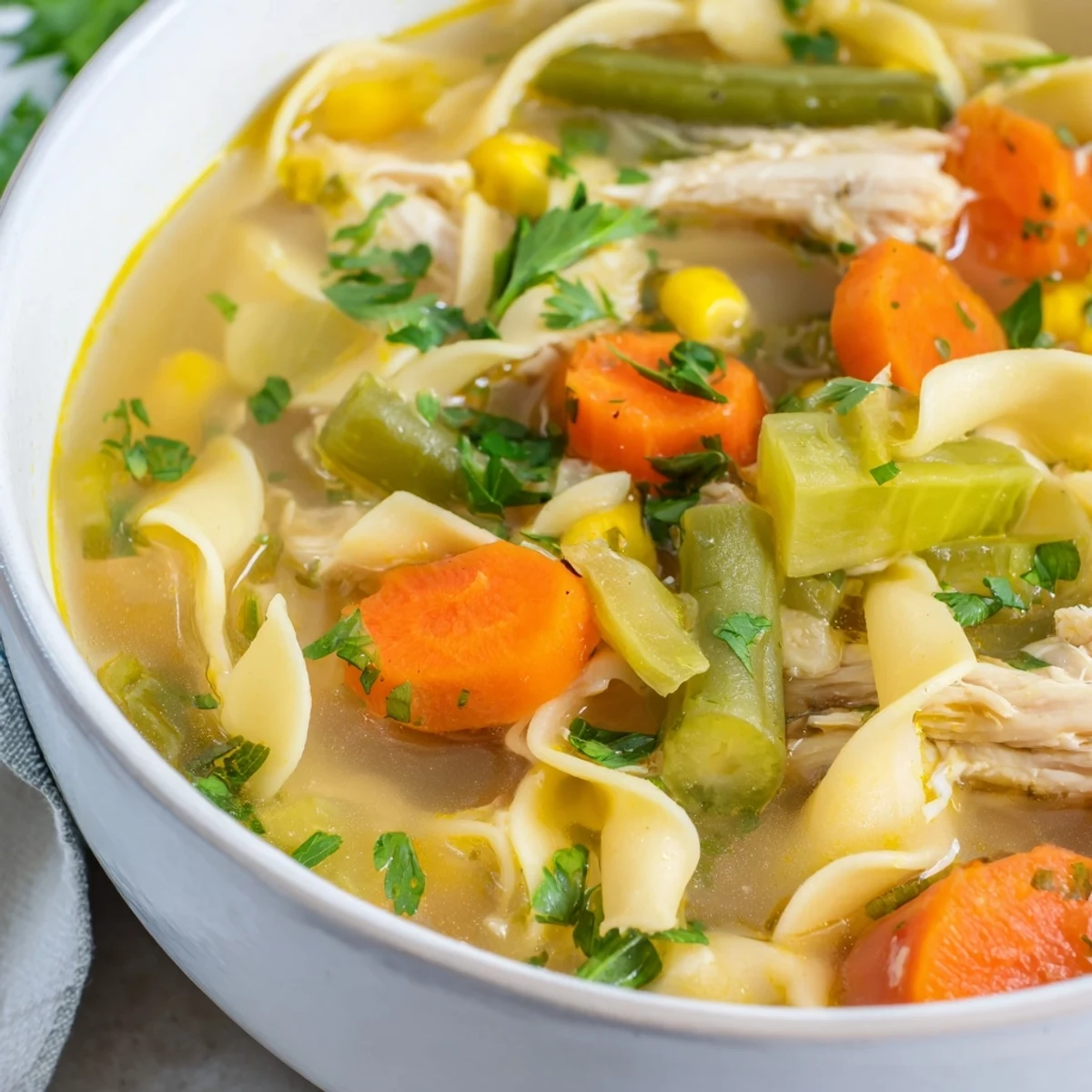
Save This comforting dish features tender diced chicken lightly sautéed then simmered with fresh carrots, celery, onion, and garlic in a flavorful broth. Green beans, corn, and peas add texture and sweetness while egg noodles cook to tender perfection. Finished with fresh parsley and seasoning, this soup provides a hearty, nourishing meal ideal for chilly days or a wholesome family lunch. Optional tweaks include lemon juice to brighten flavors or gluten-free noodles for dietary needs.
There was a Tuesday afternoon when my neighbor dropped off a rotisserie chicken, apologizing because she'd made too much. I stood in my kitchen with this golden bird and realized I had carrots, celery, and noodles—the makings of something warm. Two hours later, my kitchen smelled like home, and that soup became the thing I now make without thinking, the kind you can build with whatever vegetables are in your crisper drawer.
I made this soup for my mom the winter she was recovering from surgery, and she said it was the first meal in weeks that actually tasted like something instead of just fuel. That's when I understood—this isn't a recipe you follow for a dinner party or to impress someone. It's the thing you make when comfort matters more than technique.
Ingredients
- Chicken breasts: Two medium ones, diced small so they cook through quickly and scatter throughout the broth like little pockets of protein.
- Carrots: Slice them on the bias if you want them to look intentional, but honestly, chunky rounds work just as well and the flavor is identical.
- Celery: Don't skip it even if you think you don't like celery—it's the backbone of the broth, the thing that makes it taste like you know what you're doing.
- Onion: Dice it fine and let it soften until it's almost invisible; it sweetens the whole pot without announcing itself.
- Garlic: Two cloves minced, added after the other aromatics so it doesn't burn and turn bitter on you.
- Green beans, corn, and peas: A mix of textures and colors that makes this feel like a proper meal rather than just broth with noodles.
- Chicken broth: Use low-sodium so you control the salt and the broth doesn't overwhelm the vegetables' natural sweetness.
- Egg noodles: The small ones cook faster and nestle into spoonfuls more gracefully than large shells.
- Fresh parsley: Stir most of it in at the end so it stays bright green and herbaceous instead of darkening in the heat.
- Thyme and bay leaf: Dried thyme is dependable here; the bay leaf releases subtle pine notes that anchor everything together.
- Olive oil: Just enough to coat the pot and let the chicken brown slightly before you add the vegetables.
- Salt and pepper: Taste as you go because broth concentrates flavors as it simmers.
Instructions
- Brown the chicken first:
- Heat olive oil in a large pot over medium heat and add your diced chicken with a pinch of salt and pepper. You want the pieces to turn from pink to pale gold, about 4 minutes—don't crowd the pot or steam will trap them instead of browning them. Once they're set aside, they'll keep cooking in the broth later.
- Build the aromatic base:
- Add onion, carrots, and celery to the same pot and let them soften for about 5 minutes, stirring every minute or so. When the onion starts to turn translucent and the whole kitchen smells sweet and earthy, add your minced garlic and cook for just 1 minute more so it perfumes the oil without burning.
- Bring it all together:
- Return the chicken to the pot, pour in your broth, add the green beans, bay leaf, and thyme, and let everything come to a rolling boil. Once it's boiling, reduce the heat to medium-low, cover, and let it simmer gently for 15 minutes so the chicken cooks through and the broth develops depth.
- Add the noodles and finish vegetables:
- Stir in the egg noodles, corn, and peas, then simmer uncovered for 8 to 10 minutes until the noodles are tender and the vegetables are soft enough to enjoy. You want to taste one of the noodles to know when they're ready because egg noodles can go from perfect to mushy in 60 seconds.
- Season and serve:
- Fish out the bay leaf, stir in your fresh parsley, then taste and adjust the salt and pepper until it tastes like home to you. Ladle it into bowls and garnish with more parsley if you want it to look as good as it tastes.
 Save
Save One night I made this soup and my youngest asked if it was from a restaurant because it tasted so polished and intentional. I hadn't done anything fancy, just paid attention—diced things small, didn't rush the simmering, let the flavors meld without forcing them. That's the moment I realized this recipe isn't about fancy ingredients; it's about respecting the simple ones.
Vegetables That Work Best
The trinity of onion, carrot, and celery is traditional for a reason—they create a sweet, savory base that every other ingredient builds on. Green beans, corn, and peas add texture and slight sweetness, but if you have zucchini, spinach, or diced tomatoes hanging around, they slide in beautifully too. The rule I follow is color: if it looks bright in the bowl, it belonged in the pot.
Why This Soup Keeps Getting Made
It's not fancy, which is exactly why people ask for it. There's no cream to curdle, no long ingredient list to hunt for, no technique that requires three hands and a culinary degree. It's the soup you make on a random Wednesday because you have 55 minutes and you want your kitchen to smell warm and alive.
Making It Your Own
The beauty of this recipe is how it forgives experimentation. I've made it with rotisserie chicken when I was tired, added extra thyme when I wanted earthiness, tossed in a squeeze of lemon juice when the broth needed brightness. Each time it tastes like the same soup with a different memory attached.
- A splash of lemon juice at the end wakes everything up if the soup tastes flat after sitting.
- Fresh dill or chives scattered on top at the table add a grassy note that changes everything.
- If you want richness, stir a splash of cream into your bowl instead of adding it to the whole pot.
 Save
Save This soup has fed my family through homework nights, sick days, and quiet evenings when we just needed something warm and easy. Make it once and it becomes the recipe you reach for without thinking.
Recipe FAQs
- → How can I make this dish gluten-free?
-
Replace egg noodles with a gluten-free pasta or noodle variety to accommodate gluten sensitivities while maintaining texture.
- → Can I use pre-cooked chicken for faster preparation?
-
Yes, rotisserie or pre-cooked chicken can be added during the simmering stage to save time and still infuse flavor.
- → What vegetables work best in this preparation?
-
Carrots, celery, onions, green beans, corn, and peas provide balanced sweetness and texture, offering a colorful and hearty profile.
- → How do I prevent the noodles from overcooking?
-
Add the noodles toward the end of cooking and simmer uncovered just until tender, usually within 8 to 10 minutes, to avoid mushiness.
- → What herbs enhance the flavor of this dish?
-
Fresh parsley and dried thyme add aromatic depth, while a bay leaf contributes subtle earthy notes during simmering.