
 Save
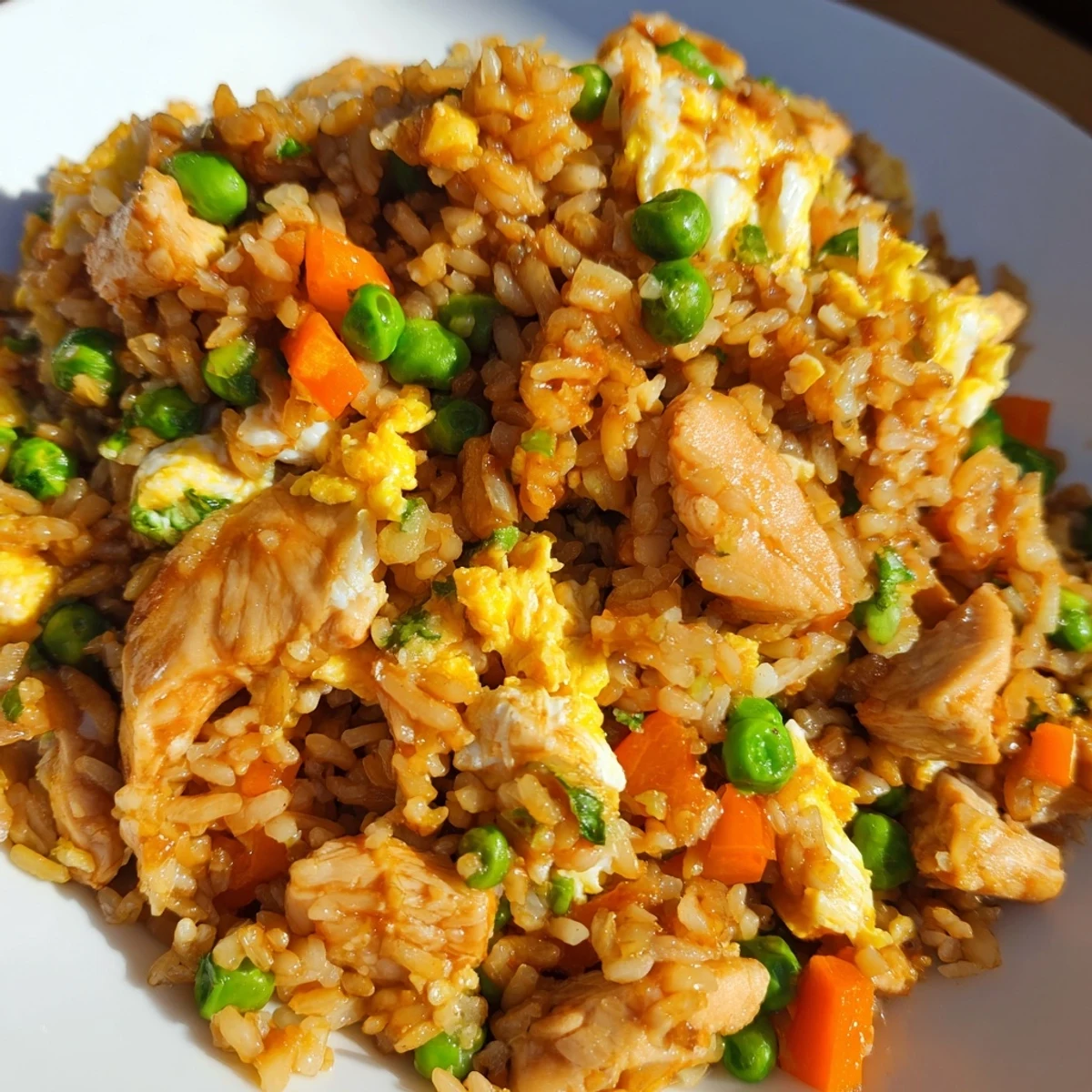
Save Start by marinating diced chicken in soy and cornstarch for tenderness. Stir-fry the chicken until golden, then remove it. Sauté carrots and scallions, add peas, and scramble eggs on the side. Toss in cold, day-old rice to break up clumps. Return the chicken to the pan, drizzle with soy and sesame oils, and toss everything until hot and fragrant. Finish with fresh scallions for a quick, flavorful meal.
There's something about the sizzle of a hot wok that instantly transports me to a tiny kitchen in Bangkok, where my friend's mother taught me the secret to restaurant-quality fried rice while our kids chased each other around the table. She insisted that cold rice was everything—that using yesterday's leftovers wasn't about being thrifty, but about getting the texture absolutely right. I've made this dish countless times since, and every time that first burst of steam hits my face, I'm back there, learning that the best meals come from knowing when to trust simplicity.
I made this for my sister one harried Tuesday when she'd just moved to a new city and had nothing but random groceries and a deep craving for something comforting. Twenty minutes later, her face lit up in a way that had nothing to do with hunger—she said it tasted like home, even though we'd grown up eating completely different food. That's when I realized this dish works because it's not about tradition; it's about the warmth of someone taking care of you in the simplest, most delicious way possible.
Ingredients
- Boneless, skinless chicken breasts: Two breasts (about 300g), diced small so they cook quickly and absorb the marinade flavors completely.
- Soy sauce: Use it twice—first to marinate the chicken and later to season the whole dish; it's the backbone of your flavor.
- Cornstarch: This one teaspoon is what makes the chicken tender instead of tough, creating a silky coating that seals in moisture.
- Day-old jasmine rice: Three cups of cold rice is absolutely crucial; fresh rice will steam and clump, so plan ahead or store cooked rice in the fridge overnight.
- Frozen peas and diced carrots: Buy them pre-cut if you can—one cup each adds sweetness and color without slowing you down.
- Scallions: Three stalks, with white and green parts kept separate because they cook at different speeds and add freshness at the end.
- Eggs: Three large eggs whisked with a tablespoon of milk create fluffy scrambled curds that should be soft and creamy.
- Sesame oil: Two teaspoons added at the very end—this fragrant oil is potent, so don't cook with it or it turns bitter.
- Oyster sauce: Optional but transforms the depth; just make sure you have a gluten-free version if that matters to you.
- Vegetable oil: Two tablespoons total for stir-frying keeps everything moving in the hot pan without burning.
Instructions
- Marinate the chicken while you prep:
- Toss diced chicken with soy sauce, cornstarch, and a teaspoon of oil in a small bowl and let it sit for ten minutes. This isn't wasted time—while it's marinating, chop your vegetables and whisk your eggs.
- Scramble eggs and set aside:
- Whisk three eggs with a tablespoon of milk, salt, and pepper. You'll cook these separately so they stay fluffy and don't overcook when everything comes together.
- Cook the chicken until golden:
- Heat a tablespoon of oil in your wok or largest skillet over medium-high heat until it shimmers. Add the chicken and stir-fry for four to five minutes, breaking it into small pieces as it cooks, then transfer to a clean plate.
- Build your vegetable base:
- Add the remaining tablespoon of oil to the same pan, then toss in the white parts of your scallions and diced carrots. Let them cook for two to three minutes until the carrots just start to soften, then add the peas and cook for one more minute.
- Scramble eggs gently into the vegetables:
- Push the vegetables to the side of the pan, pour in your egg mixture, and let it set for just a few seconds before stirring gently. You want soft curds, not tiny bits.
- Add rice and break up every clump:
- Pour in all three cups of cold rice and use your spatula to break apart any stuck-together bits, stirring constantly for two to three minutes. The rice should heat through and start to absorb the oil.
- Bring everything home with sauce and chicken:
- Return the cooked chicken to the pan, then add three tablespoons soy sauce, oyster sauce if you're using it, and two teaspoons of sesame oil. Toss everything together until the rice is evenly coated and steaming hot, about one minute.
- Finish with fresh scallion greens:
- Scatter the green parts of your scallions on top and taste for seasoning. Add more black pepper if it needs it, then serve immediately while everything is still hot and the scallions are still bright.
 Save
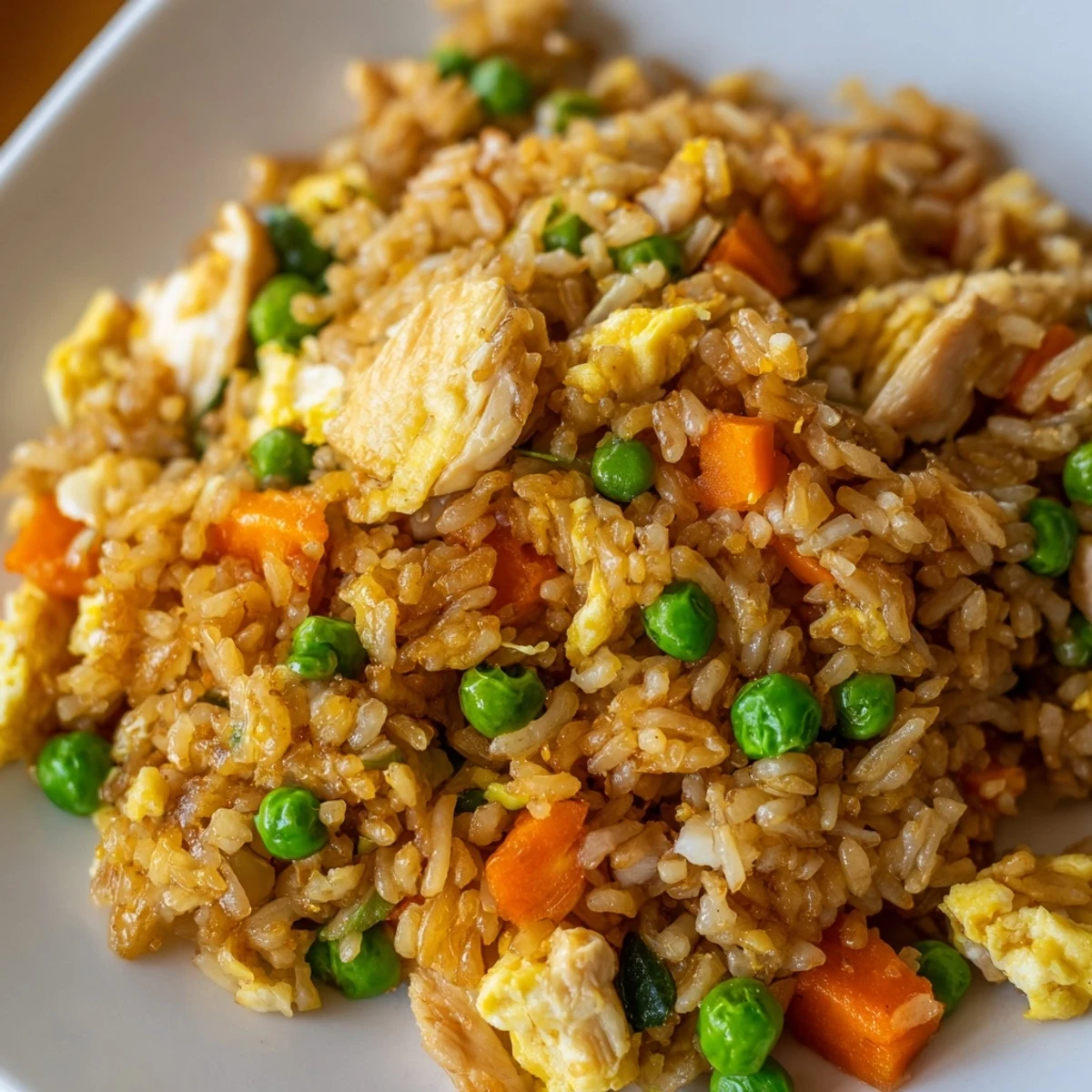
Save My eight-year-old asked me once why I always made fried rice on Thursday nights, and I realized I'd never given it much thought—but somewhere along the way, this dish had become our ritual. It's the meal where everyone contributes, even just by tasting as we go, and it's simple enough that nothing can really go wrong.
The Magic of Cold Rice
The difference between fried rice that tastes like a restaurant and fried rice that tastes like wet mush comes down to one thing: moisture. Fresh rice has absorbed water during cooking, so when it hits a hot wok, that moisture turns to steam and everything sticks together. Cold rice has dried out slightly, so each grain stays independent and gets coated with oil instead of clumping. If you don't have day-old rice, spread freshly cooked rice on a sheet pan and let it cool in the fridge for at least an hour, or even just crack it apart with a fork while it's still warm, which helps it dry faster.
Timing and the Art of Not Overcooking
The whole dish takes about thirty-five minutes, but that includes marinating and prepping—actual cooking time at the stove is maybe twelve minutes total. The key is having everything prepared and waiting by the time you turn the heat on; once the wok is hot and the oil is shimmering, you need to move quickly. Don't wander away or the vegetables will overcook, the chicken will dry out, and the eggs will separate. This is a one-person job, or one person leading while someone else passes ingredients.
Playing With Flavors and Swaps
This is as flexible as it is forgiving—shrimp cooks in the same time as chicken, tofu can be pressed and fried until it's crispy instead, and if you skip the protein entirely, nobody will judge you. White pepper is spicier and more floral than black pepper, so if you want a different taste, swap it in. A splash of Shaoxing wine or even a tiny bit of white vinegar adds complexity that feels like a restaurant secret, though it's entirely optional.
- For heat, stir in sriracha, chili sauce, or even a pinch of cayenne right at the end.
- Swap oyster sauce for a splash of hoisin if that's what you have, or skip it entirely and add an extra teaspoon of sesame oil.
- Cucumber slices or fresh herbs stirred in at the very last second add brightness that cuts through the richness perfectly.
 Save
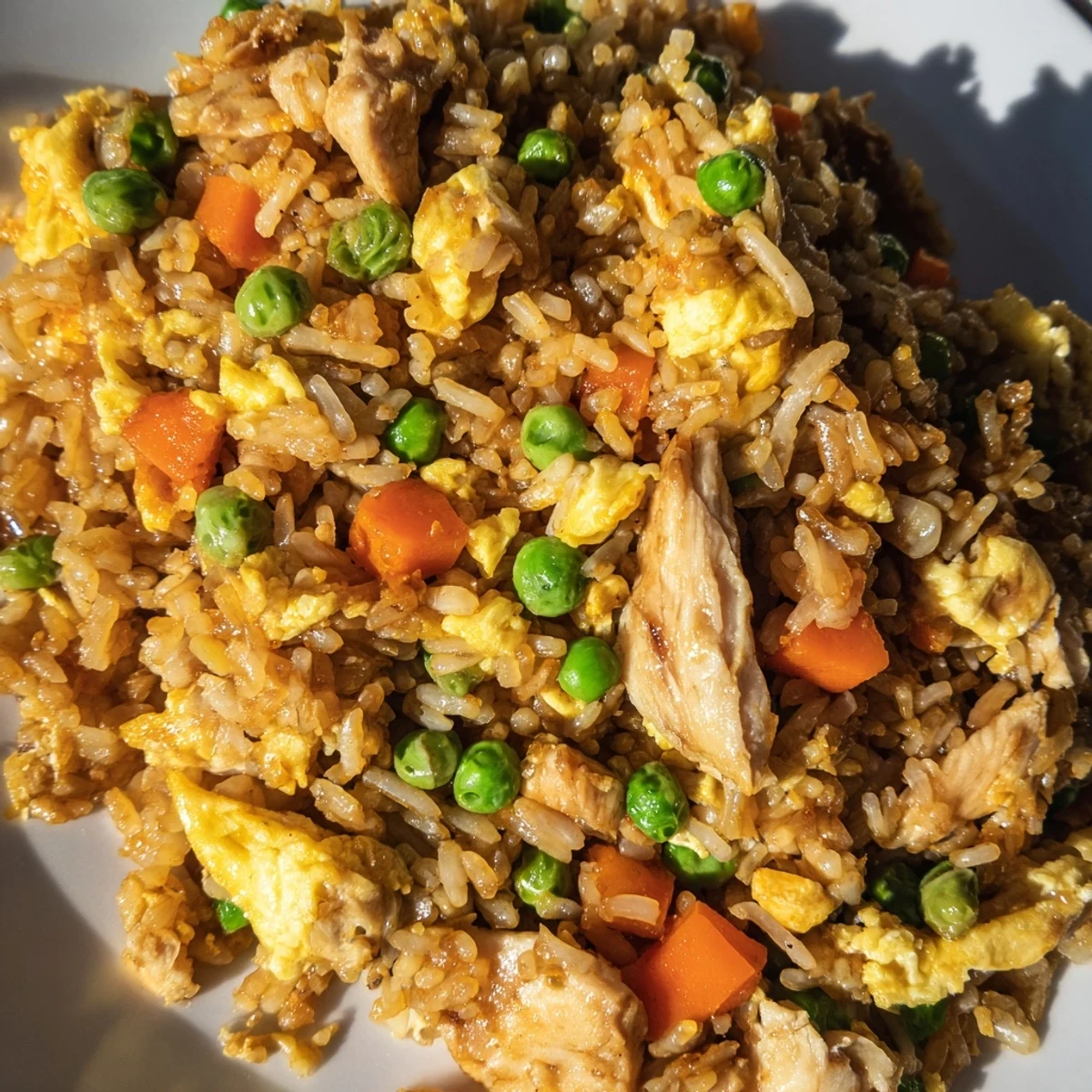
Save This fried rice has become the meal I reach for when I want to feel like I'm taking care of someone—whether that's myself on a Wednesday night or a friend who just needs something warm and real. It's the kind of dish that tastes like it took hours but gives you your evening back.
Recipe FAQs
- → Can I use freshly cooked rice?
-
Freshly cooked rice often becomes mushy due to excess moisture. For the best texture, use day-old, refrigerated rice which firms up the grains for stir-frying.
- → What protein alternatives can I use?
-
Shrimp, diced pork, or firm tofu work excellently as substitutes. Adjust cooking times accordingly to ensure the protein is cooked through before adding vegetables.
- → How do I prevent the eggs from overcooking?
-
Scramble the eggs gently over medium-high heat until just set, then remove them or push them aside immediately. They will finish cooking when mixed back with the hot rice.
- → Is oyster sauce necessary?
-
Oyster sauce adds a rich, savory depth, but it is optional. You can substitute it with extra soy sauce or a splash of hoisin for a different flavor profile.
- → Can I add other vegetables?
-
Absolutely. Diced bell peppers, snap peas, corn, or broccoli are great additions. Ensure they are cut into small, uniform pieces for even cooking.