
 Save
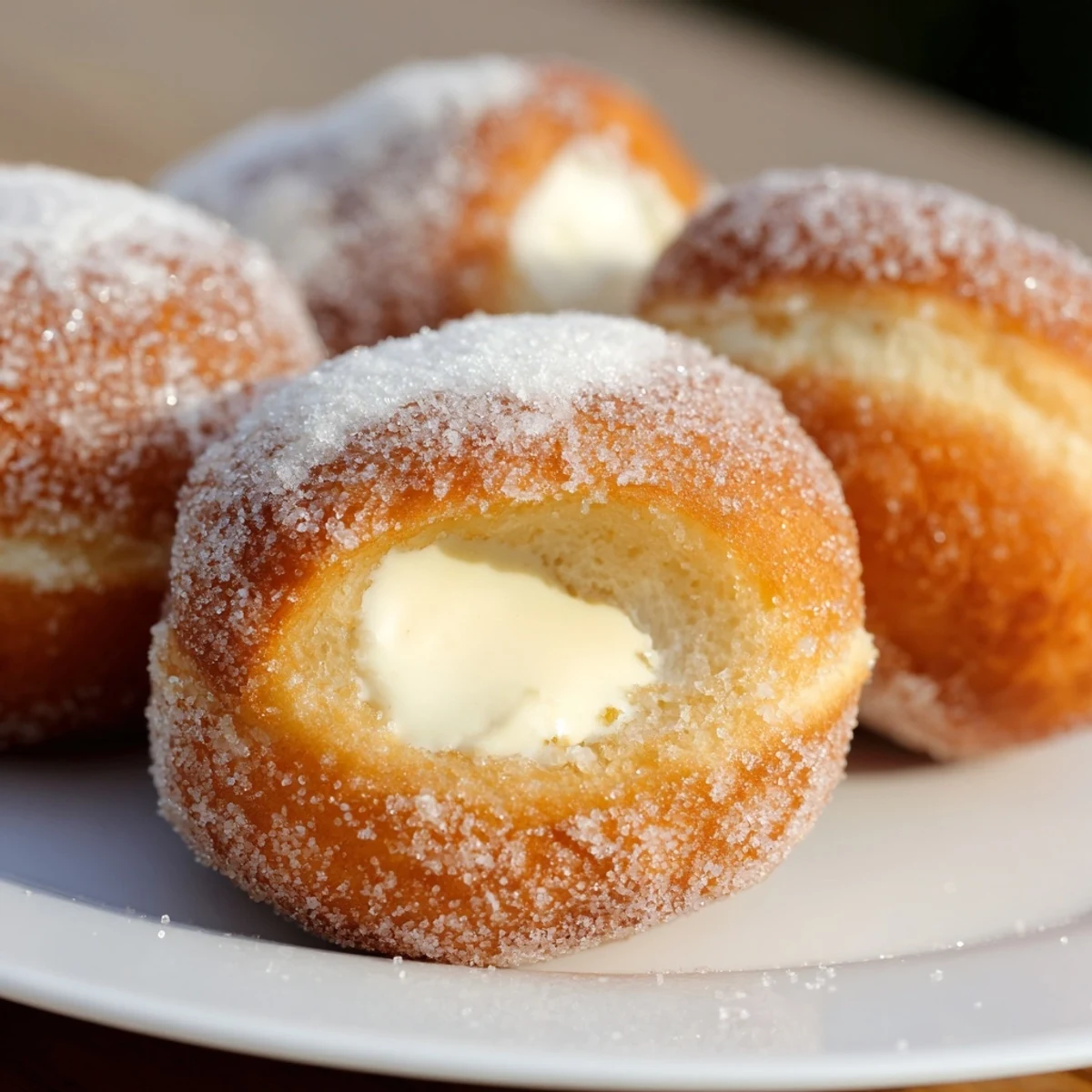
Save These classic Italian treats feature pillowy-soft dough, fried until golden and coated in sparkling sugar. The centerpiece is the rich vanilla pastry cream filling that bursts through each bite. Perfect for weekend breakfasts or special occasions.
The dough requires patience—allowing proper rise time creates the signature airy texture. Meanwhile, prepare the silky custard by slowly tempering egg yolks with warm milk, then cooking until thickened.
Frying at the right temperature ensures even cooking without excess grease. Fill while still slightly warm for that irresistible contrast between crisp exterior and cool, creamy center. Best enjoyed fresh with espresso.
The first time I walked into that pasticceria in Rome, the air was thick with the scent of frying dough and vanilla. I watched the nonna behind the counter dip each golden sphere into sugar, her hands moving with a rhythm honed over decades. That afternoon, I ate three bomboloni standing up, powdered sugar coating my black sweater like culinary confetti. I came back every morning for the rest of that trip.
Last December, I made these for my sister's birthday breakfast. She took one bite, closed her eyes, and whispered that she felt like she was back in our grandmother's kitchen. The kitchen was freezing that morning, steam rising from the fryer in ghostly ribbons. We ate them standing around the stove, burning our fingers on the hot dough, not caring one bit.
Ingredients
- 500 g all-purpose flour: This forms the foundation of your dough, creating structure while still yielding to that pillowy texture we're after
- 60 g granulated sugar: Just enough to balance the dough without competing with the sweet cream filling
- 7 g instant dry yeast: One packet is perfect for this quantity, giving you reliable rise every time
- 200 ml whole milk, lukewarm: The warmth activates the yeast while the milk fat contributes to tender dough
- 60 g unsalted butter, softened: This creates richness and helps keep the bomboloni soft even after cooling
- 2 large eggs: Room temperature eggs incorporate better into the dough structure
- 1 tsp vanilla extract: Use the good stuff here since vanilla is the star of our show
- 1/2 tsp salt: Essential for balancing all that sweetness and enhancing flavor
- Zest of 1 lemon: Microplane it fine so the lemon oils perfume every bite without fibrous bits
- 500 ml whole milk: Whole milk creates the silkiest pastry cream foundation
- 4 large egg yolks: Save those whites for meringues or macarons another day
- 100 g granulated sugar: This sweetens the cream without making it cloying
- 40 g cornstarch: The thickening agent that transforms milk into luscious custard
- 1 tsp vanilla extract: Pure vanilla makes all the difference in the cream
- Zest of 1/2 lemon: A subtle bright note that cuts through the richness
- 30 g unsalted butter: Stirred in at the end for that glossy finish and extra velvety mouthfeel
- Vegetable oil: Neutral oil lets the doughnut flavors shine without competition
- 100 g granulated sugar: For that iconic crystalline coating that makes them impossible to resist
Instructions
- Make the dough:
- Combine flour, sugar, yeast, and salt in a large bowl, then whisk together lukewarm milk, eggs, vanilla, and lemon zest separately before mixing wet into dry ingredients
- Knead and rise:
- Add softened butter and knead for 8 to 10 minutes until the dough feels smooth and elastic, then cover and let it rise in a warm spot for 1 to 1.5 hours until doubled in size
- Prepare the pastry cream:
- Heat milk with lemon zest until just simmering while whisking egg yolks, sugar, and cornstarch until smooth, then gradually pour hot milk into yolks while whisking constantly
- Thicken the cream:
- Return mixture to the saucepan and cook over medium heat, stirring continuously until thickened, which takes about 2 to 3 minutes, then remove from heat and stir in vanilla and butter
- Chill completely:
- Transfer to a bowl and cover with plastic wrap touching the surface to prevent skin formation, then refrigerate until fully chilled and thickened
- Shape the dough:
- Punch down the risen dough and roll to 1.5 cm thickness on a floured surface, then cut rounds with a 6 to 7 cm cutter and let rise for 30 to 40 minutes until puffy
- Fry to golden:
- Heat oil to 170°C and fry bomboloni in batches for 2 to 3 minutes per side until deep golden, then drain on paper towels and roll in sugar while still warm
- Fill generously:
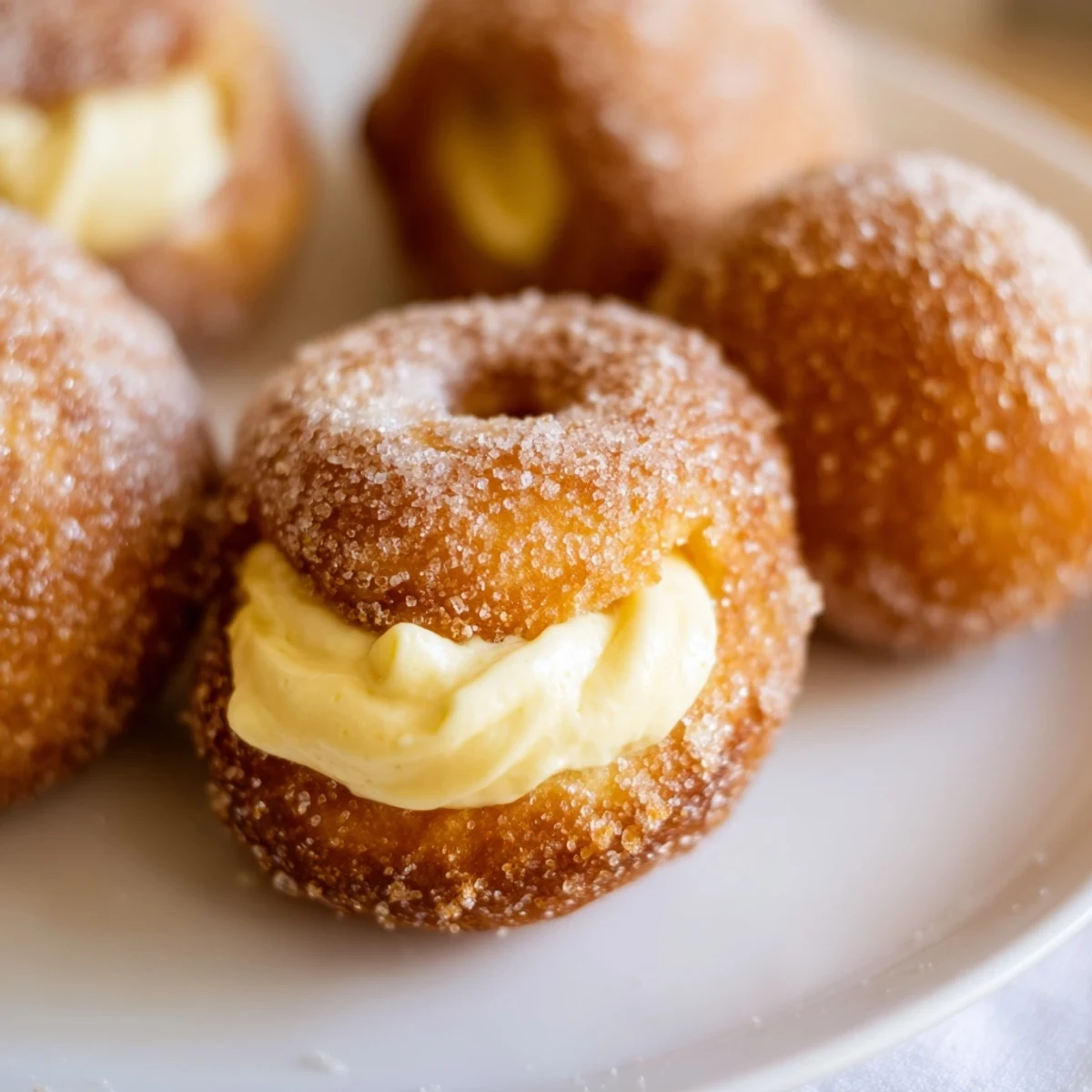
- Place chilled cream in a piping bag with a long nozzle, poke a hole in each bombolone, and pipe in as much filling as each doughnut will take
 Save
Save My neighbor Elena knocked on my door the day I first perfected these, drawn by the smell of frying dough. She taught me to tap the bomboloni after frying to release excess oil before the sugar dip. We stood in my tiny kitchen eating them warm, cream running down our chins, laughing about how diet rules were meant to be broken.
Mastering the Rise
The trick to pillowy bomboloni is patience with the rising process. Find the warmest corner of your kitchen, maybe near a sunny window or beside a preheating oven. I've learned that rushing this step results in dense, disappointing doughnuts that don't puff properly in the fryer.
Frying Temperature Secrets
Invest in an instant-read thermometer if you're serious about bomboloni. The oil needs to stay consistently hot but not smoking. I keep a small bowl of water nearby to lower the temperature quickly if things get too hot. After all these years, I can judge by the bubble pattern, but a thermometer never lies.
Filling Like a Pro
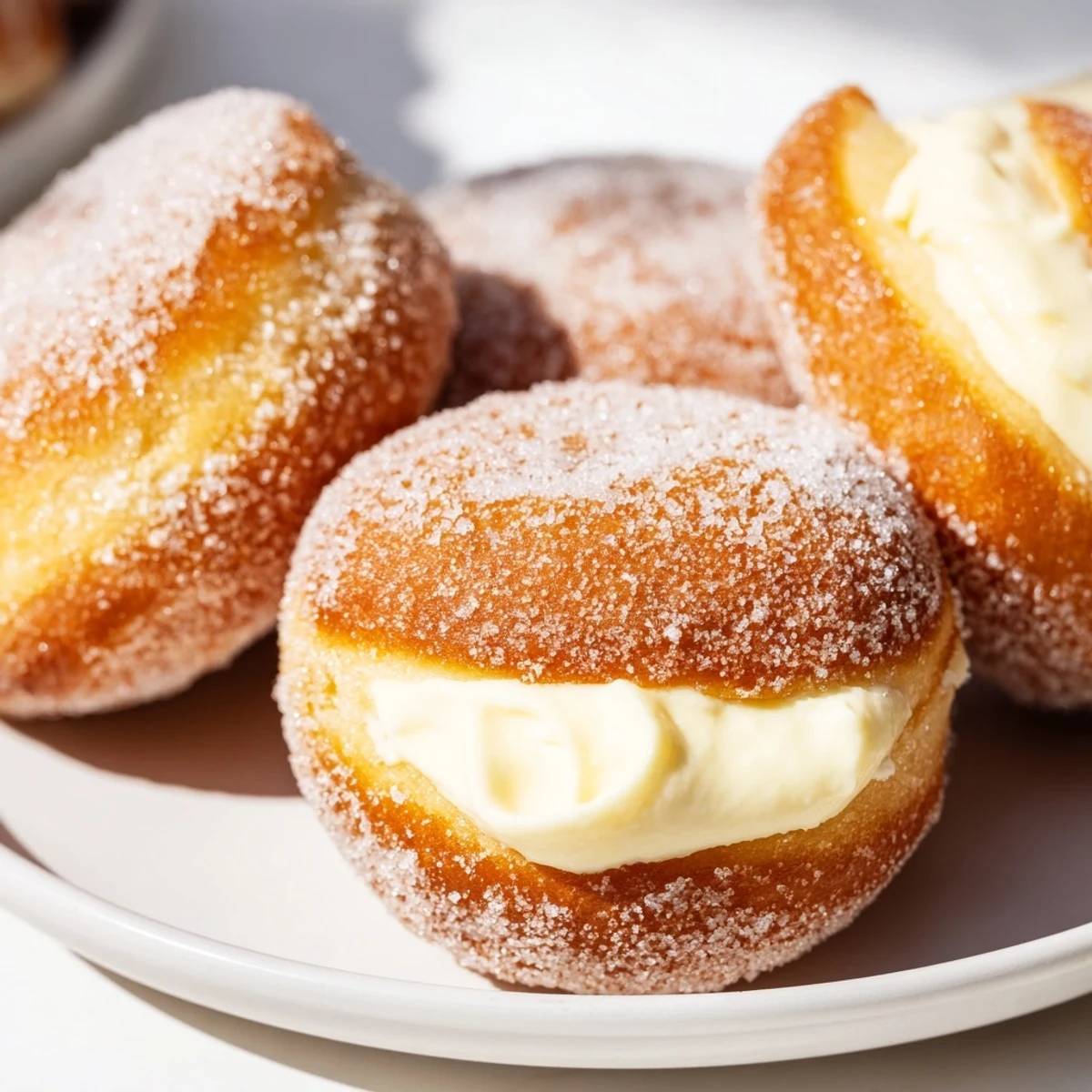
The most satisfying moment comes when you fill that first bombolone and feel it grow heavy in your hand. I twist the piping bag as I work, keeping pressure even for the smoothest fill. Some days I get ambitious and try different fillings, but vanilla cream remains the classic for good reason.
- Warm them slightly in the oven before serving if they've been sitting
- The sugar coating works best when applied within minutes of frying
- Extra cream keeps beautifully in the fridge for midnight snacks
 Save
Save There's something almost meditative about standing over the fryer, watching these little clouds of dough turn golden. I hope these bring as much joy to your kitchen as they've brought to mine over the years.
Recipe FAQs
- → What makes bomboloni different from regular doughnuts?
-
Bomboloni are distinctively Italian, featuring a lighter, yeast-raised dough similar to brioche. Unlike American doughnuts, they're always filled—traditionally with pastry cream—and tossed in granulated sugar rather than glazed. The filling is inserted after frying, creating that signature cream-filled center.
- → Can I bake these instead of frying?
-
While traditional bomboloni are deep-fried, you can bake them at 375°F (190°C) for 12-15 minutes. Brush with melted butter before baking to help the sugar coating adhere. Note that baked versions won't achieve the same crispy exterior or characteristic taste, though they'll still be delicious with the cream filling.
- → How long does the pastry cream keep?
-
Pastry cream stays fresh in the refrigerator for up to 3 days when stored in an airtight container with plastic wrap pressed directly onto the surface to prevent skin formation. For best results, fill the bomboloni within 24 hours of making the cream, as the texture may begin to break down after that.
- → What's the best way to fill bomboloni without making a mess?
-
Use a piping bag fitted with a long, narrow nozzle (Bismarck tip works perfectly). Insert the nozzle deep into the side of each warm doughnut and gently squeeze until you feel slight resistance. The cream will fill the center, and the sugar coating helps hide any small entry points.
- → Can I prepare the dough in advance?
-
Absolutely. After the first rise, punch down the dough, wrap tightly in plastic, and refrigerate overnight. The cold fermentation develops flavor. Bring to room temperature for 30 minutes before rolling and cutting. The shaped rounds also can be covered and refrigerated for several hours before frying.
- → Why did my doughnuts become greasy?
-
Greasy doughnuts usually result from oil temperature that's too low. When the oil isn't hot enough (below 340°F), the dough absorbs excess fat rather than quickly forming a crust. Use a kitchen thermometer to maintain 170°C (340°F) and fry in small batches to prevent temperature drops.