
 Save
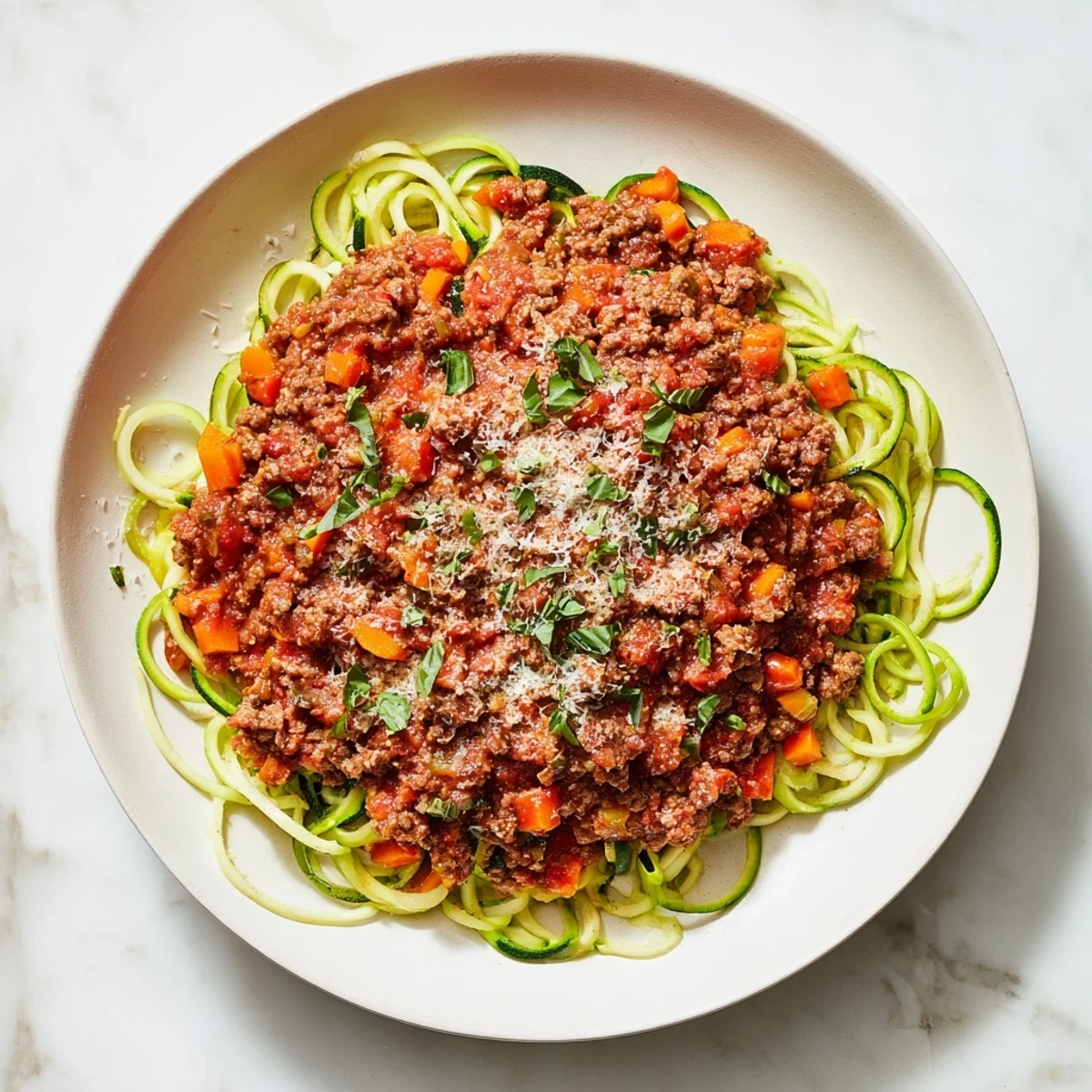
Save This dish combines a hearty, slow-simmered beef and tomato sauce infused with aromatic herbs and spices. Vegetables like onion, carrot, celery, and bell pepper add depth and sweetness. Served atop lightly sautéed spiralized zucchini, it offers a fresh and low-carb alternative to traditional pasta. Optional ingredients like red wine and Parmesan enhance the flavors, creating a balanced, satisfying meal perfect for a wholesome dinner.
I stumbled on this combination purely by accident one rushed Tuesday when I had thawed beef but no pasta in the pantry. My spiralizer sat buried in the back of a drawer, and I figured zucchini was worth a shot. The sauce bubbled away while I cranked out those ribbons, and when I tasted the first forkful, I realized I didn't miss the carbs at all.
I made this for my sister when she visited last spring, and she kept saying it tasted like our grandmother's Sunday gravy but somehow fresher. We sat on the back porch with our bowls, twirling zucchini ribbons and laughing about how skeptical she'd been when I told her there was no spaghetti involved. By the end of the night, she'd asked me to write down every step.
Ingredients
- Lean ground beef: The foundation of any good Bolognese, and leaner cuts mean less grease to drain so the sauce stays silky.
- Olive oil: Just enough to get the vegetables sweating without adding heaviness.
- Onion: Chop it fine so it melts into the sauce and adds natural sweetness as it cooks down.
- Garlic: Wait until the vegetables soften before adding it or it will burn and turn bitter.
- Carrots: They bring a subtle sweetness that balances the acidity of the tomatoes.
- Celery: Adds an earthy backbone that deepens the overall flavor without announcing itself.
- Red bell pepper: A slight departure from tradition, but it gives the sauce a gentle fruity note.
- Zucchini: Pick firm, medium sized ones because the giant ones have too much water and go limp fast.
- Crushed tomatoes: I prefer canned San Marzano if you can find them, the flavor is richer and less sharp.
- Tomato paste: This is where the umami hides, stir it in well so it doesn't clump.
- Dried oregano: A little goes a long way, too much and it tastes like pizza instead of pasta sauce.
- Dried basil: Complements the oregano and rounds out the herby warmth.
- Dried thyme: Just a whisper of it ties everything together without overpowering the tomato.
- Crushed red pepper flakes: Optional but I always add them for a gentle kick that creeps up on you.
- Salt and black pepper: Taste as you go, the Parmesan at the end adds saltiness too.
- Bay leaf: Toss it in whole and fish it out before serving, it adds a mysterious depth you will miss if you skip it.
- Dry red wine: If you have an open bottle, use it, the acidity brightens the sauce and makes it taste more complex.
- Beef or vegetable broth: Thins the sauce just enough so it clings to the noodles instead of sitting in a puddle.
- Parmesan cheese: Freshly grated is a must, the pre shredded stuff does not melt the same way.
- Fresh basil: A handful torn over the top makes it look and taste like you put in twice the effort.
Instructions
- Start the soffritto:
- Heat the olive oil until it shimmers, then add the onion, carrot, celery, and bell pepper. Stir them around until they soften and smell sweet, about five to seven minutes.
- Wake up the garlic:
- Toss in the minced garlic and let it cook for just one minute. You will know it is ready when the kitchen smells like an Italian grandmother moved in.
- Brown the beef:
- Add the ground beef and break it apart with your spoon, pressing it into the vegetables. Cook until no pink remains, then drain any excess fat so the sauce does not get greasy.
- Build the base:
- Stir in the tomato paste, crushed tomatoes, oregano, basil, thyme, red pepper flakes, salt, and black pepper. Mix everything until the paste disappears into the tomatoes.
- Simmer low and slow:
- Pour in the wine and broth, drop in the bay leaf, and bring it all to a gentle bubble. Cover the pot halfway and let it simmer on low for twenty five to thirty minutes, stirring now and then so nothing sticks.
- Prepare the zucchini noodles:
- While the sauce simmers, heat a large skillet over medium high heat and add the spiralized zucchini. Toss them for two to four minutes until they soften but still have a little bite.
- Finish the sauce:
- Fish out the bay leaf and taste the Bolognese. Adjust the salt and pepper if it needs it.
- Plate and garnish:
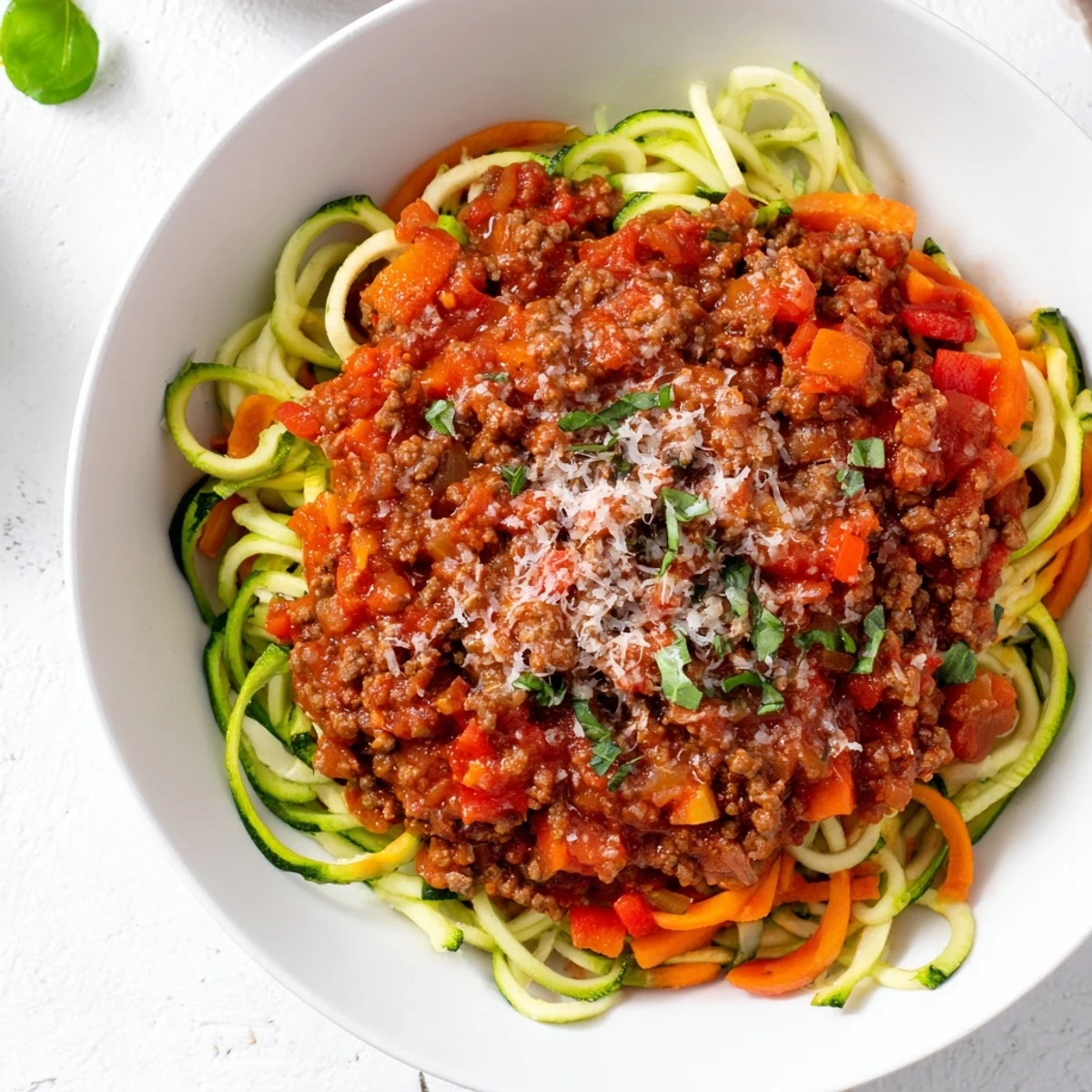
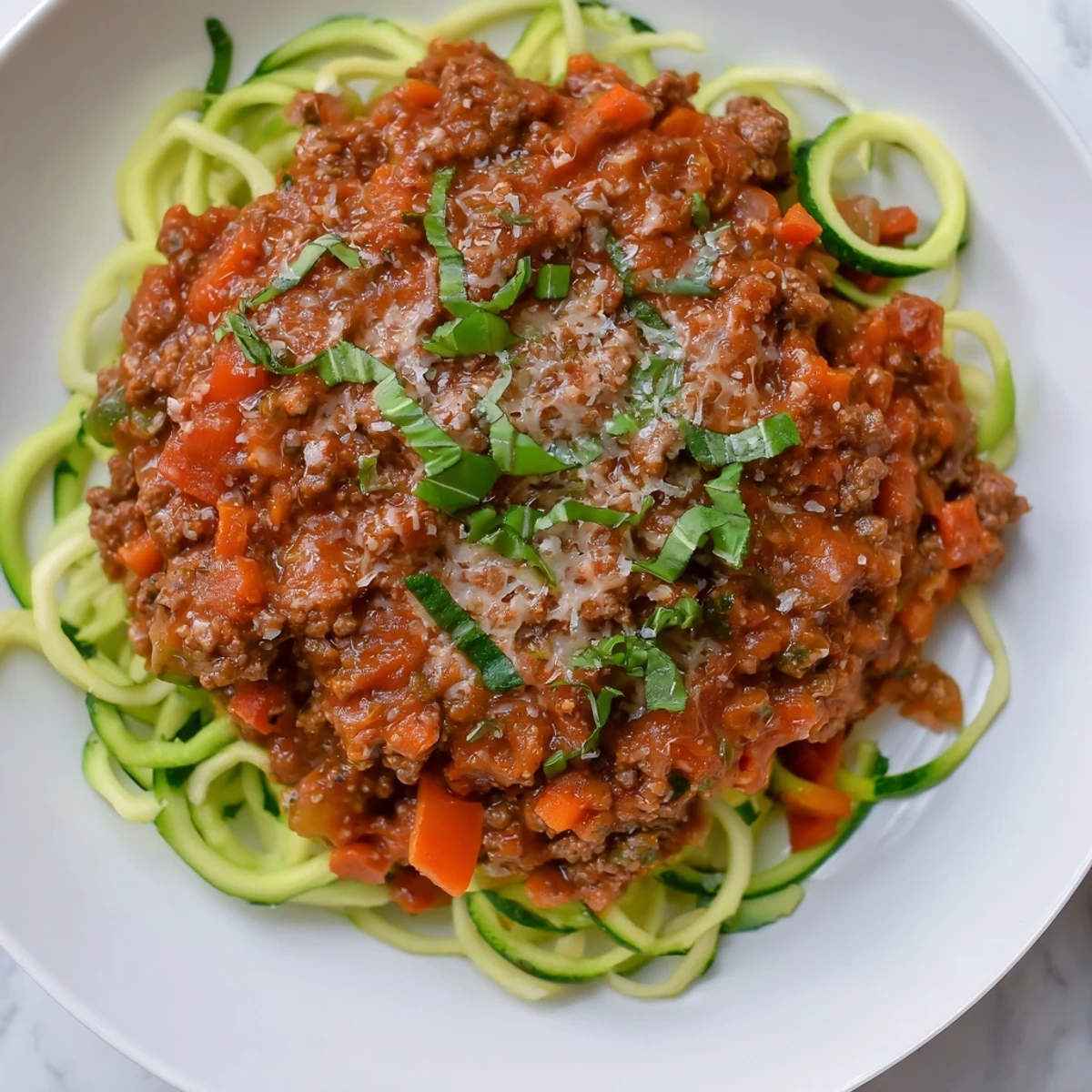
- Divide the zucchini noodles among your bowls, spoon the beef sauce over the top, and sprinkle with Parmesan and fresh basil. Serve it hot and watch everyone dig in.
 Save
Save One rainy Saturday, I made a double batch and froze half the sauce in mason jars. Weeks later, when I had no energy to cook, I thawed a jar and spiralized fresh zucchini in under ten minutes. It felt like a hug from my past self, and I realized this recipe was not just dinner but a little act of kindness I could give myself on hard days.
How to Store and Reheat
The Bolognese keeps in an airtight container in the fridge for up to four days, and it actually tastes even better after the flavors marry overnight. I do not recommend storing cooked zucchini noodles because they get watery and sad, so spiralize them fresh each time. If you want to freeze the sauce, let it cool completely, then portion it into freezer safe jars leaving an inch of headspace, and it will last up to three months.
Swaps and Substitutions
Ground turkey or pork work just as well if you want to switch up the protein, and I have even used half beef and half Italian sausage for extra flavor. If you do not have red wine, a splash of balsamic vinegar does the trick, or just use more broth and add a pinch of sugar to balance the tomatoes. For a dairy free version, skip the Parmesan or try nutritional yeast for a cheesy hint without the lactose.
Serving Suggestions
This dish stands on its own, but I love pairing it with a simple arugula salad dressed in lemon and olive oil to cut through the richness. A crusty piece of gluten free bread for dipping into the extra sauce never hurts either. If you are feeling fancy, pour a glass of Chianti or any dry Italian red and pretend you are sitting in a trattoria in Tuscany.
- Serve it family style in a big shallow bowl so everyone can help themselves.
- Top with extra fresh basil and a drizzle of good olive oil right before bringing it to the table.
- Leftovers make an excellent lunch tucked into a container with the sauce and noodles kept separate until you reheat.
 Save
Save This recipe taught me that comfort food does not have to be heavy, and that sometimes the best meals are the ones born from an empty pantry and a little curiosity. I hope it becomes a weeknight favorite in your kitchen the way it has in mine.
Recipe FAQs
- → Can I use other meats instead of beef?
-
Yes, ground turkey or pork can be substituted to vary the flavor and texture of the sauce.
- → How do I keep zucchini noodles from getting soggy?
-
Sauté the zucchini noodles briefly over medium-high heat for 2-4 minutes to keep them tender but firm.
- → Is it necessary to use red wine in the sauce?
-
No, the wine is optional; you can omit it without significantly affecting the overall flavor.
- → What herbs enhance the beef sauce best?
-
Dried oregano, basil, thyme, and a bay leaf impart classic Italian aroma and depth to the sauce.
- → Can I prepare the sauce ahead of time?
-
Yes, simmering the sauce up to an hour deepens the flavors and it can be stored refrigerated for later use.
- → How can I make this dish dairy-free?
-
Simply omit the Parmesan cheese or use a plant-based alternative to keep it dairy-free.